Rugged Pursuit
Withdraw to the Wilderness
Bookends 2023
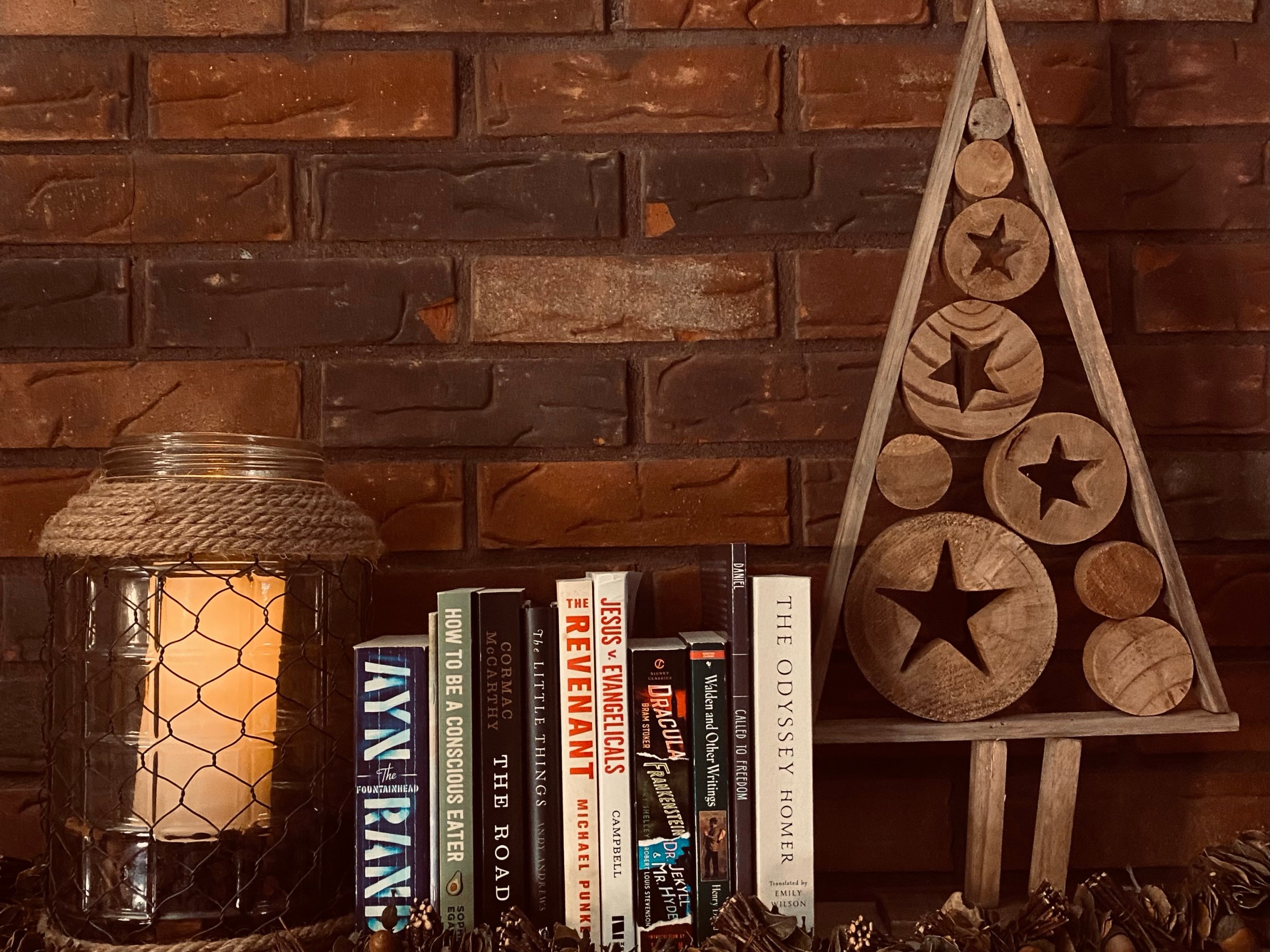
Old books, new books, red books, blue books, and even a few audio books! Here is a list of all the books I read, or listened to, in 2023!
Looking back on the year 2023, I would like to take a moment to review and reflect on the various books I read throughout the past year.
Every year, I try to read as many books as I can in one calendar year. My goal is to read as many, or more, books as the year before.
I set a goal for myself at the beginning of 2023 to read at least twenty-four books throughout the year. Much to my amazement, I actually accomplished my reading goal; something that hasn’t happened in a long time! Admittedly, a few of those were audio books that I listened to on commutes and while exercising, but they still count! Is that cheating? Since I am the one who sets the reading goals for myself, I also declare that I get to make the reading rules. Therefore, I say audio books count!
Now for the breakdown! The following is a list of all the books I read this year, along with a brief summary, and maybe a review, of some of the ones that stood out to me most.
Books I Read in 2023
- The Postmodern Pilgrim’s Progress- The Babylon Bee
- The Fountainhead- Ayn Rand
- The Most Dangerous Game- Richard Connell
- How to Be a Conscious Eater- Sophie Egan
- Don’t Hold Back- David Platt
- The Road- Cormac McCarthy
- The Little Things- Andy Andrews
- The Revenant- Michael Punke
- Jesus V. Evangelicals- Constantine R. Campbell
- Frankenstein- Mary Shelley
- A Week On the Concord and Merrimack Rivers- Henry David Thoreau
- Civil Disobedience- Henry David Thoreau
- Walden- Henry David Thoreau
- Life Without Principles- Henry David Thoreau
- The Main Woods- Henry David Thoreau
- Cape Cod- Henry David Thoreau
- The Journal- Henry David Thoreau
- The Seven Realities for Experiencing God- Henry & Richard Blackaby
- Called to Freedom- Elise Daniel, LCI
- The Odyssey- Homer, Translated by Emily Wilson
- The New Testament (NLT)
- The Anatomy of the State- Murray Rothbard
- The Truth About Taxes- Murray Rothbard
- Education: Free and Compulsory- Murray Rothbard
- The Great Gatsby- F. Scott Fitzgerald
- The Lost World- Sir Arthur Conan Doyle
Here are the breakdowns of some of the standouts from the past year.
The Fountainhead- by Ayn Rand
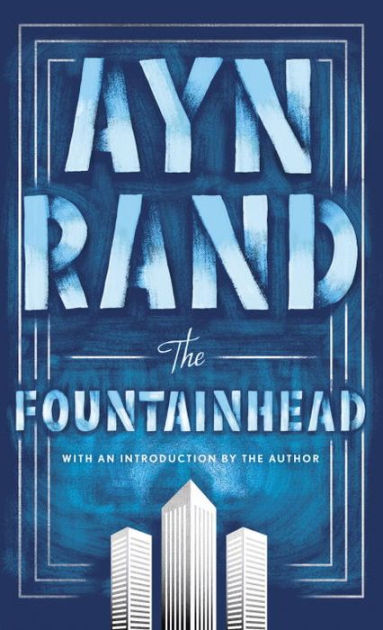
The Fountainhead, and later, Atlas Shrugged (1957), are considered to be the books that launched Ayn Rand towards her spectacular success. The story follows the life and career of a young architect, Howard Roark. Howard displays incredible skill in designing buildings, yet refuses to fall in line with the status quo of the industry. Howard would rather design and construct buildings and homes exactly how he pleases than bend to the whims of current trends to gain success and notoriety. His values and dedication to the craft of architecture are unwavering, regardless of how it affects his ability to make money. He decided early on that he would do things his own way and be in control of his own mind, labor, and destiny.
This story isn’t all blueprints, bricks, and boards, however. It also has love and romance weaved in. The woman who loves him marries his worst enemy, and it seems the whole world is set on destroying Howard and bringing his work to a halt. In this work of fiction, first published in 1943, Rand showcases her challenging belief that a man’s ego is the fountainhead of human progress.
How to Be a Conscious Eater- by Sophie Egan

After a friend posted on social media about how much this book made them want to put more thought into their food choices, I was really excited to read it myself. I have been keeping chickens for eggs and meat for several years, as well as turkeys, ducks, guineas, and rabbits. I have dabbled at gardening but have not yet mastered it. I am also a hunter and eat all of the wild game that I harvest. My understanding was that this book would point out the importance of getting back to our roots and eating more whole, natural, and fresh foods, as opposed to ultra processed “foods” and packaged items. After all, just because something is edible doesn’t make it food. I want to have a closer relationship with my food and know what I am eating, to a reasonable extent. But, I have to be honest, I expected more from this book.
Basically, the book was a list of reasons why everything you eat is bad for the environment. After reading this book, I came to the conclusion that there is nothing that is okay to eat guilt-free. It left me asking, “So, what can I eat?”, and gave few solid answers. Also, it was obvious from things the author would say, and the general tone of the book, that meat is a major no-no. Although the author didn’t always come out and say “Meat is bad. Don’t eat it”, it was clearly more than implied. Eating zero meat is going to be a hard pass for me!

I wish this book would have given the conscious eater a better plan for making good food choices. I’m sure that was the intent, but it was not the message I was receiving. It felt more like one big long shame-fest. Bummer.
The Road- by Cormac McCarthy

A man and his son travel through a burned, post-apocalyptic America in route to the coast. They don’t know what they will find there, yet still they walk. They own very few possessions. They have a pistol with very little ammo, a shopping cart of supplies and food they are lucky enough to find along the way, and most importantly, they have each other, “each the other world’s entire.”
This is a story of the love between father and son that readers, especially those that are parents, will find heart wrenching. Brett McKay, creator of The Art of Manliness, reads The Road every year as a reminder to be a better father and to continue to “carry the fire“, a term used often throughout the book. This is a book with an ending that will make a grown man cry, or so I am told…
The Revenant- by Michael Punke
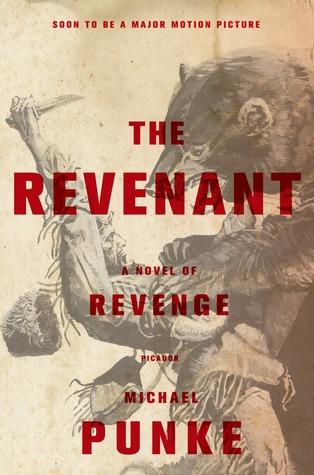
In 1823 Hugh Glass was brutally attacked by a bear, left for dead by his traveling companions, and lived to tell about it. I always planned to watch the movie that was based off of this book, starring Leonardo DiCaprio. After hearing podcasts discussing the incident, I learned that the movie strayed pretty far from the book and was not worth watching. I skipped the cinematic drama and went straight to the source, Michael Punke’s book.
This book hits on all the things boys fantasize about when they are young: Traveling across uncharted territories, hunting and trapping for food and furs, camping under the open sky, and encounters with incredible animals. However, this particular animal encounter turned Western real fast! Against all odds, Hugh Glass survives the brutal bear attack and manages to stay alive, fueled solely by rage and revenge.
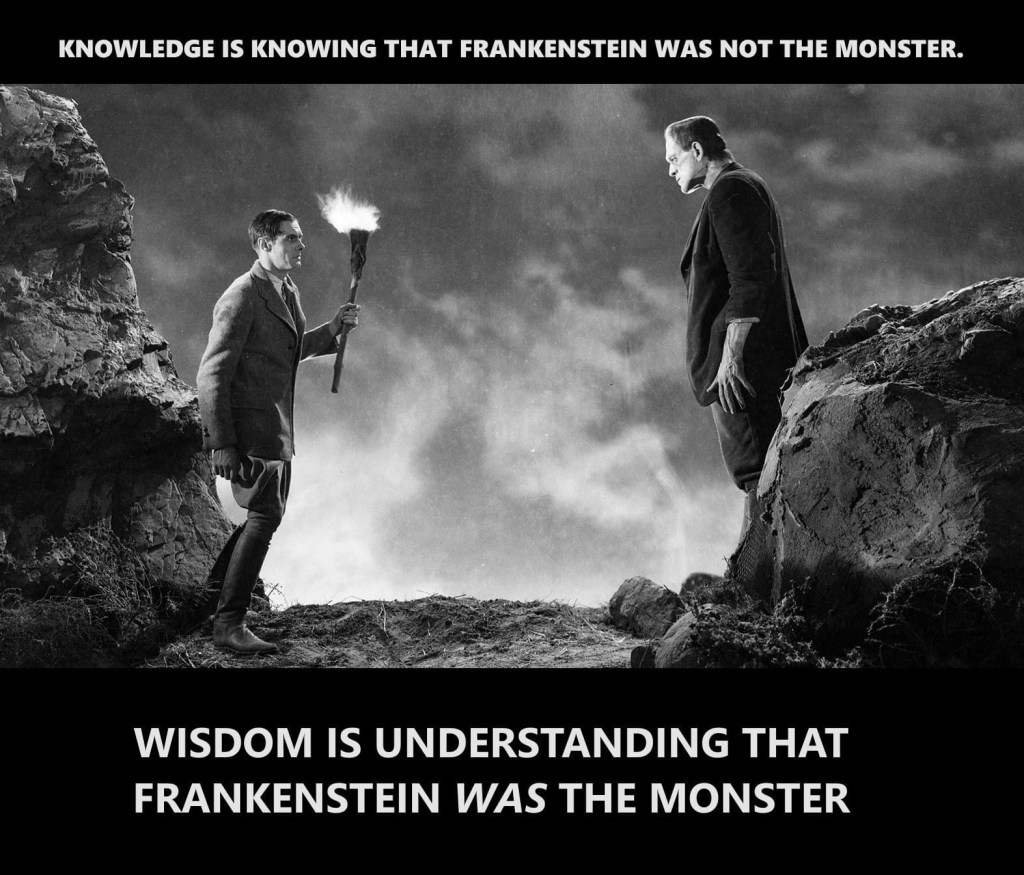
Frankenstein- by Mary Shelley
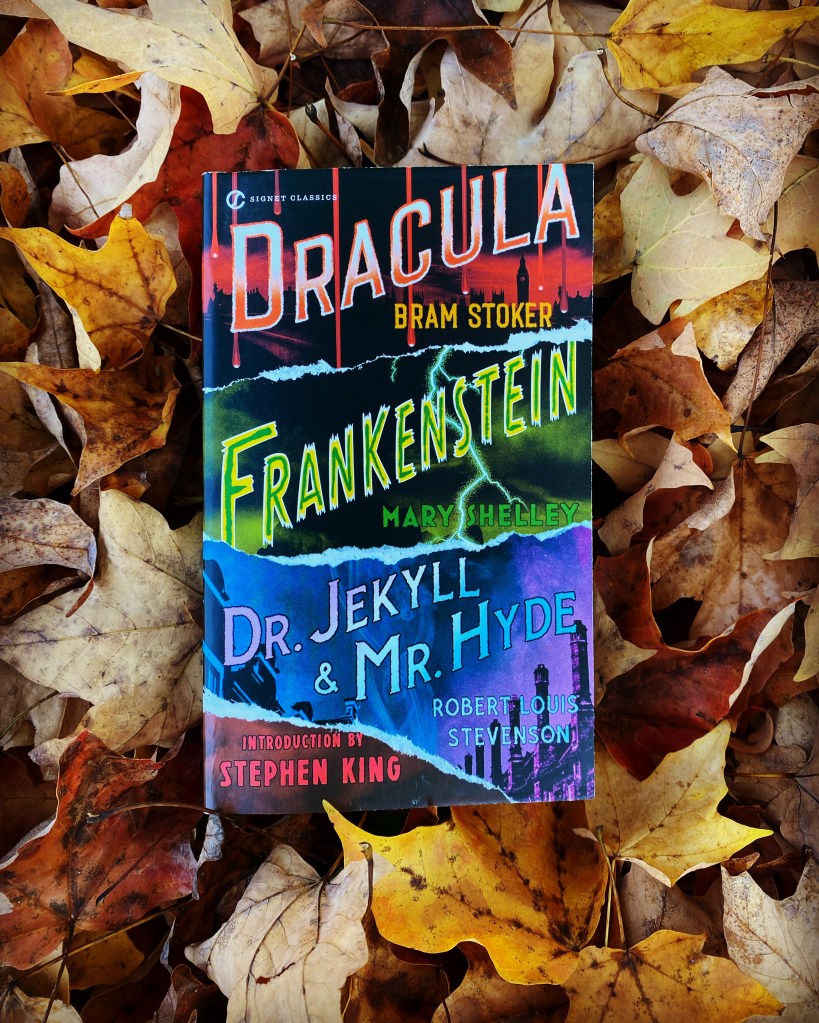
In October, I thought it would be fitting to read a scary story for spooky season. I don’t really have any experience in the horror genre, so I decided I would re-read a classic from my school days. I remember reading Frankenstein as required reading in my advanced English class in 9th grade. At the time, I wasn’t much interested in reading. Now that I am no longer being forced to read, I can’t get enough of books!
I remember as a freshman in high school being asked to examine the different themes in Frankenstein. One theme that I found relatable to the modern world was the controversial topic of abortion. I saw similarities between Dr. Victor Frankenstein’s regret for creating a hideous monster, and an expecting parent who regrets the creation growing inside of them. I couldn’t help but notice how Dr. Frankenstein abruptly regretted his work when he realized how this being he created could affect his own personal life and goals. My teacher, apparently, did not agree that the topic of abortion was in any way relevant, and relayed her feelings with a red “X” written on that portion of the assignment. I wanted to reread the book to see if I still had that opinion. You can read it for yourself and be the judge.
The story of Frankenstein’s monster taught me a lesson about how, just because you can do something, doesn’t mean that you should. Otherwise, you may be faced with regret and unimaginable grief, like the kind Dr. Frankenstein experienced.
Walden and Other Writings- by Henry David Thoreau
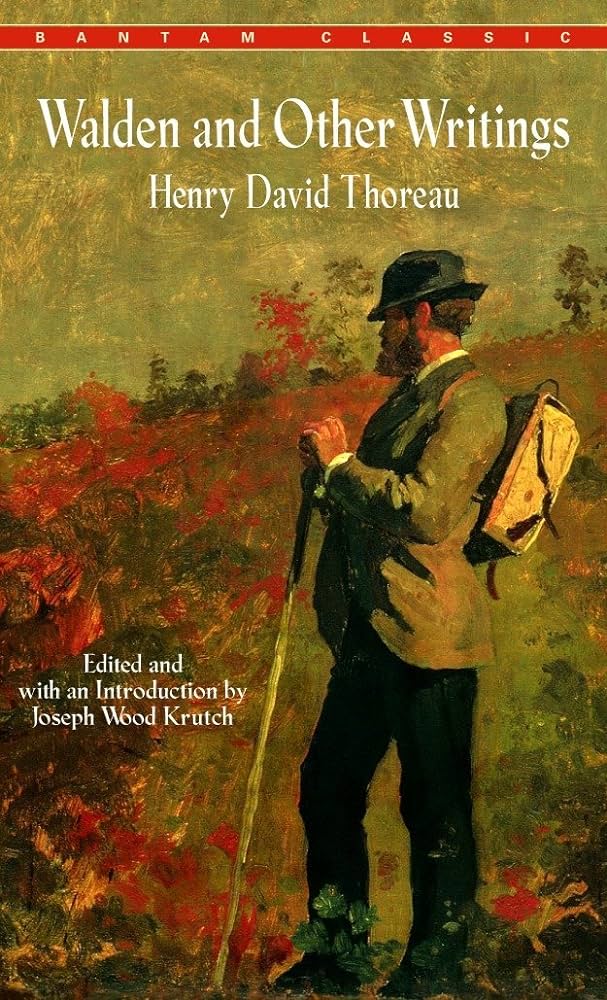
I first heard of the man who built his own cabin in the woods while listening to The Art of Manliness Podcast. Henry David Thoreau lived in this simple dwelling on Walden Pond for just over two years on the property of his friend, author Ralph Waldo Emerson. This story of a secluded life in the woods sounded intriguing to me. Come to find out, he was not as far from civilization as I had imagined, and usually walked into town every day. It was neat to learn about his cabin, and the area of Walden Pond in which it was constructed, but there was also a lot of non-essential information given that droned on at times. Many of his stories that I read seemed to have that theme: ramblings that did not seem to have a purpose or to land anywhere. The introduction to the book, written by Joseph Wood Krutch, even warned of this. In fact, I found the introduction to be very much enjoyable and informative about the life and beliefs of Thoreau. I probably could have stopped there and still felt well informed about the story of the cabin on Walden Pond.
Of the collection of stories I read of Thoreau’s, Civil Disobedience and Life Without Principles were the ones I liked best. I could really appreciate how Thoreau was noticing the injustices around him and the obvious government overreach that was going on. For example, he knew it was abhorrent to pay taxes to a government that thought it was okay to own another human as a slave. Even though his writings took place in the mid 1800s, his thoughts on politics and how to relate to his fellow man apply as well today as they did when he wrote them.
Called to Freedom- Edited by Elise Daniel

Called to Freedom is a collaboration of several different writers from the Libertarian Christian Institute (LCI). The book seeks to explain why a person can be both a libertarian and a Christian. I do find it a little strange that a book needed to be made to explain this, because I am not really sure why people think the two are at odds. I guess it is because most people do not have a clear understanding of what libertarian philosophy even is. If you are someone who thinks “libertarian” is some sort of dirty word, or is something that would be anti-Christian, this book provides a great explanation as to why a Christian can absolutely be a libertarian. By the time you get half way through this book, you may even come to the conclusion that a Christian should be a libertarian! Honestly, I think most Christians are more libertarian than they know, it’s just that they’ve been told their whole lives that Christians belong to a certain political party, and any other political philosophy therefore must be bad. This is utter nonsense. Called to Freedom explains why.
The Odyssey

War and violence, wealth and poverty, anger and revenge, Cyclops and Sirens: The Odyssey has all of this and more. First written in the 8th century BC, and considered by many to be the first great adventure story of the Western canon, The Odyssey has certainly stood the test of time.
Odysseus is a wealthy king that goes off to war and survives, only to become lost at sea, held captive by gods, creatures, and foes, and tempted by beautiful, yet deadly, singing Sirens. He endures almost every other circumstance you could image and is separated from his wife, Penelope, and his son, Telemachus, for two decades! Meanwhile, back in Ithaca, greedy suitors have taken over his home, are courting his reluctant wife, and are squandering his wealth with lavish banquets. Penelope remains faithful to her husband and grieves for him without rest. Her patience pays off when Odysseus returns to exact revenge on all those who have taken advantage of his absence.
I happened upon this book by random chance and decided to look it over to see if I remembered anything from when I originally skimmed through it nearly twenty years ago. As a teen, I just wanted to get through it as quickly as possible (with the help of Spark Notes) so I could get back to fishing. I was able to enjoy it more this time around.
The New Testament- New Living Translation
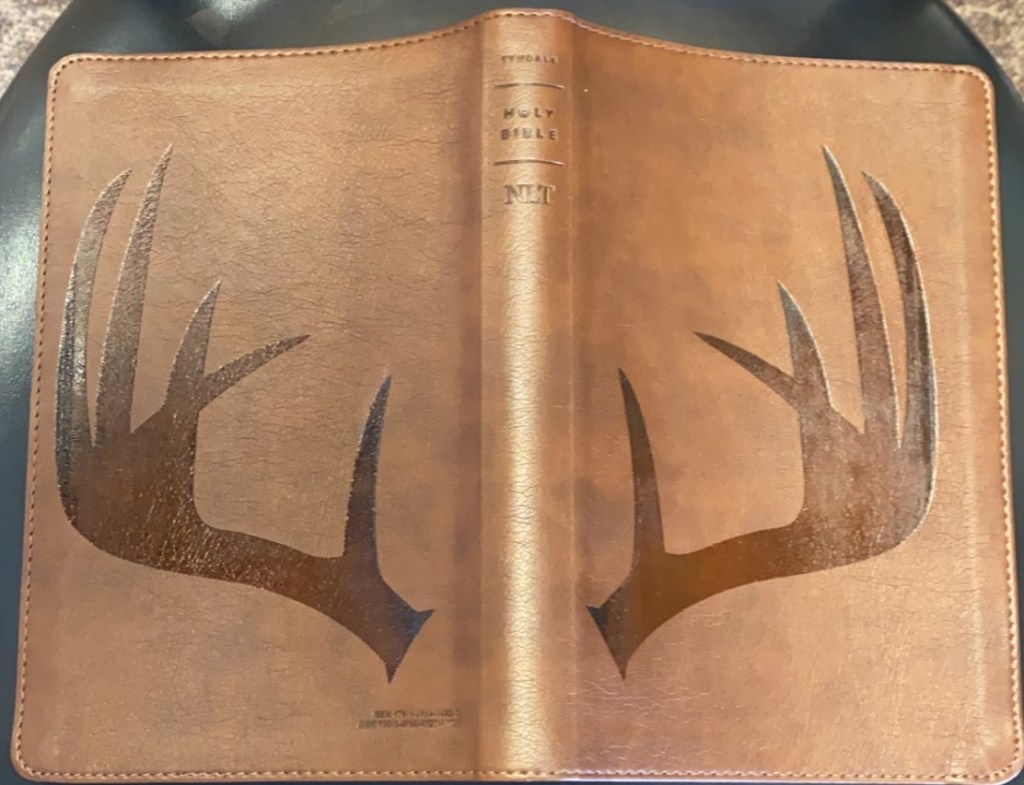
I have been reading through the Bible annually for several years now. This discipline has been immeasurably beneficial to my personal and spiritual life. Setting aside daily Bible reading time brings peace and balance to the day. I follow a reading plan that outlines exactly what to read each day in order to complete it in a calendar year.
This year I wanted to put a special focus on the New Testament. I wanted to take an opportunity to hone in on a smaller portion of the Bible as a way to be able to dig deeper into the content. I was able to use that time for further study on the day’s scripture and for journaling my thoughts about what I gained from the reading. I wanted to be careful not to get too caught up in the quantity I was reading, and focus more on how much I was able to get out of the passage.
Reading the entire Bible is absolutely something I recommend to everyone, especially confessing Christians! If that sounds too intimidating for you, start smaller. Find a reading plan that is more manageable. I have some recommendations in “Daily Pursuit” and “My Year in the Bible“. Believe it or not, it is not as hard or time-consuming as you think. In as little as twelve minutes of reading per day, you could read through the entire Bible in one year! This chart breaks it down:

Audio Books
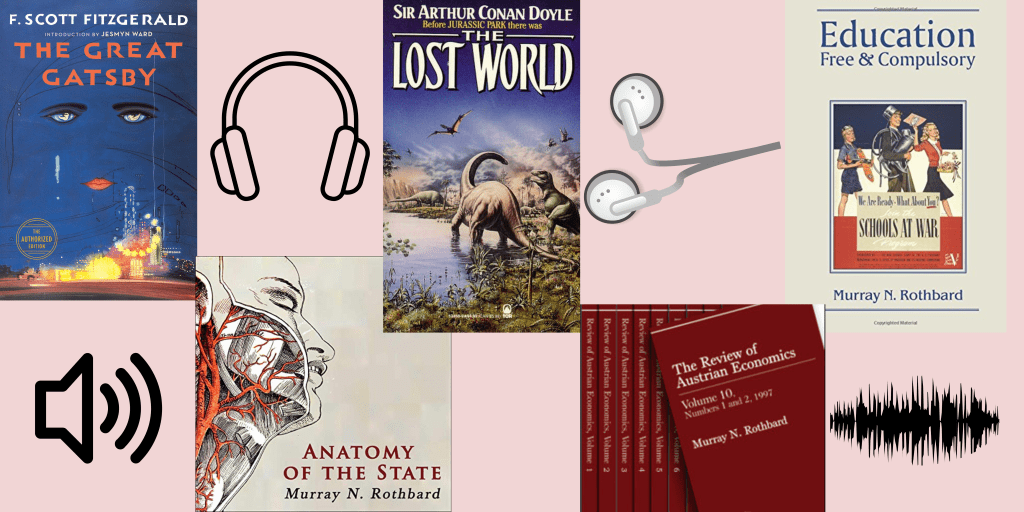
Do audio books count towards a reading goal? Maybe they don’t exactly count as reading, but they are books. I stumbled upon some free audio books from The Mises Institute as well as a good selection from Apple Audio Books. While I very much prefer a physical copy of a book, audio books are a good way to get in some “reading” time while on the go. I listened to these while I was driving, feeding my chickens, and exercising.
Listening to a book does come with some challenges. I found it hard to focus on the content, especially while doing something important, like driving. I wouldn’t recommend audio books for important content that you really need to study well and retain. I picked audio versions of books that I was interested in checking out, but that I didn’t really have time to sit and read at the moment. This way, I could revisit an old classic from my school days, like The Great Gatsby, or try out a story I have heard referenced in podcasts or articles, without interrupting the physical book I was already in the process of reading. I definitely plan to continue listening to books on audio as a way to get a glimpse into subjects that interest me.
In Conclusion
I was glad to have accomplished my reading goal of twenty-four books. Admittedly, I wouldn’t have accomplished it if I hadn’t included five audio books towards my total. I feel no shame. I also have a good line-up of a few books that I cannot wait to read next year! In the coming year, I plan to read a variety of different genres and categories of books. I like to do that to stay well rounded and to never stop learning.
I plan to read some old books, some newly published books, and some books that I think will challenge me. A few that I have in mind are City of God by St. Augustine, Until the Streetlights Come On by Ginny Yurich, The Stranger in the Woods by Michael Fink, and some stories by Ernest Hemingway.
I always plan ahead to have at least one book “on deck” for when I finish my current one. When I start to get halfway though my current book, I will go ahead and get my next one on order. I love the feeling of picking up a new book at my local bookstore!
If any of the titles I have listed above sparks your interest, I encourage you to drive to your local bookstore and pick up a copy. Make a personal reading goal for yourself this year! I have included some links to some of the books where you can view and purchase them online through an independently owned bookshop. Please #ShopSmall and support the local bookstores in your area. Trust me, they need our business right now. If you are like many people and do not have a bookstore in your town, I have provided a link in the “Additional Resources” at the end of this article that will allow you to shop online while still supporting a local bookstore!*
What About You?
What are you reading right now?
What new releases of 2023 did I miss? What are some free audio books that I should download next? I am always looking for new and exciting titles to add to my list!
Add your thoughts or recommendations in the comments below, contact me through this site by clicking CONTACT, or reach me by email at ruggedpursuitdevo@gmail.com.
Happy reading!
12.27.23

Additional Resources:
*Don’t have a local, independent bookstore in your area? You are not alone. Indie Bookstore Finder can help you find the closest independent bookstore to you based off your location. However, be aware that not all independent retailers are listed on their site.
*Is there absolutely no way you can visit an independent bookstore in-person? There is a way to shop online for the titles you want, and still buy from local bookstores closest to you. Check out Get it Local, Today! and Bookshop.org. This might be the next best alternative. Every purchase on their site supports independent bookstores.
*This website is provided free of charge by volunteers! If you feel led to support Rugged Pursuit and its mission to continue creating Christian devotional content, feel free to do so with the donation form below. Any and all support is much appreciated, but certainly not required.
Make a one-time donation
Make a monthly donation
Make a yearly donation
Choose an amount
Or enter a custom amount
Thank you so much for your one-time donation supporting the mission of Rugged Pursuit to spread the Gospel and encourage Christians through the content on this website. Thank you for partnering with us. Your contribution is appreciated!
Thank you so much for your monthly donation supporting the mission of Rugged Pursuit to spread the Gospel and encourage Christians through the content on this website. Thank you for partnering with us. Your contribution is appreciated!
Thank you so much for your yearly donation supporting the mission of Rugged Pursuit to spread the Gospel and encourage Christians through the content on this website. Thank you for partnering with us. Your contribution is appreciated!
DonateDonate monthlyDonate yearly Rugged Pursuit
Thanks for sharing these book reviews. I’d not heard of some of these yet.
Also, audio books do count as reading, according to the public library’s summer reading program. 😁
LikeLike