Rugged Pursuit
Withdraw to the Wilderness
Don’t Waste the Hard Stuff

“Even when you have been hurt, you may be uniquely positioned to bring healing to those around you who are in similar circumstances. When you are hurting, you can still heal others, even as you yourself are healing.”
“When Jesus heard what had happened, He withdrew by boat privately to a solitary place. Hearing of this, the crowds followed Him on foot from the towns. When Jesus landed and saw a large crowd, He had compassion on them and healed their sick.”
Matthew 14:13-14
In Matthew 14, the evil King Herod orders that John the Baptist be killed as a way to appease his dinner guests. It is a ruthless and reckless action that takes the life of an innocent man in a senseless, brutal way.
When Jesus heard the news that John the Baptist was beheaded, He left to go to a remote area to be alone. However, the crowds followed Him. When Jesus saw them, He had compassion on them and healed their sick.
Help, Even When You Are Hurt
There will be times when you encounter devastating news and are overcome by grief. Naturally, you may just need to get away and have some time by yourself to process the emotions. You should take as much time as you need. But be prepared to help others in the future. There will be people in similar circumstances who will be looking to you for advice, guidance, or encouragement. They may be watching and learning from your example. They are lost in their pain also and they may be looking for someone who can understand their situation to come alongside them.
Jesus received devastating news, yet still had compassion for the hurting people around Him and healed them. I think part of the reason He could continue on with good work, despite the bad news, is that He knew there was more to the story. Jesus could see the big picture. He knew what was to come. This was not the final end for John the Baptist, but only the end of his time on Earth. John would have eternal life in glory with the Father! That knowledge helps me immensely when dealing with loss.
Christians know that those who have put their trust in Jesus will live forever in Heaven.
What the Enemy Means for Evil, God Uses for Good
Joseph endured a series of trials, depicted in the book of Genesis. He was the favorite son of Jacob, which caused a lot of envy and angst among his eleven brothers.
He faced betrayal by his jealous brothers who plot to get rid of him by selling him into slavery (Genesis 37:18-28). This led him to serve in Egypt where he encountered false accusations of misconduct from his master’s wife, resulting in imprisonment (Genesis 39:7-20). Despite these adversities, Joseph remained faithful to his beliefs.
A run of crazy dreams among his fellow prisoners, and Pharaoh himself, led to Joseph interpreting dreams in prison (Genesis 40:1-23), which eventually led to his release and rise to power as a trusted advisor to Pharaoh, King of Egypt (Genesis 41:1-57).
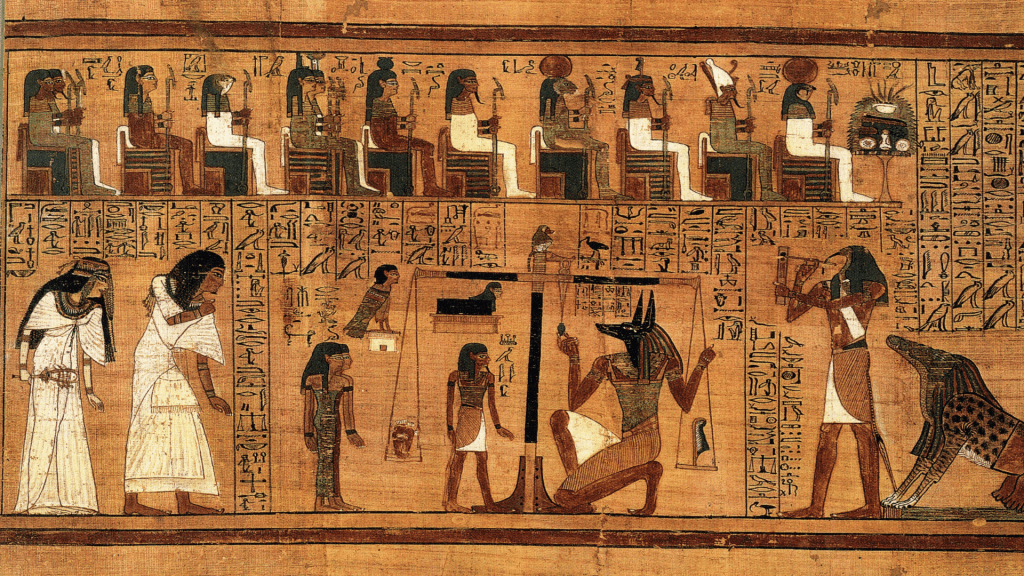
Through these trials, Joseph demonstrated resilience, forgiveness, and unwavering faith in God. Ultimately, he reconciled with his brothers and saved his entire family during a severe famine (Genesis 42-45), showcasing the theme of redemption and the providence of God in his life.
If he had not gone through the horrible oppression that he did, Joseph would not have been so perfectly positioned to save his family, and nation, from certain starvation.
Down, But Not Out
You may be down, but you are not out. I am not trying to make light of your situation, or say your pain is not valid. I know you have been hurt, and you have every right to analyze and process. However, you may also be in a position to bring healing as well.
Joseph could have easily given up, cursed God for abandoning him, and succumbed to his ill fate. But he did not let his situation get the best of him. He continued to trust in God’s saving grace. Joseph remained faithful to God, and God remained faithful to Joseph. He was in great turmoil, no doubt. But God was using him to showcase a magnificent redemption story.
Don’t Waste Your Pain
So, don’t waste your pain. God takes what the enemy means for evil and He turns it to good (Genesis 50:20). He did it for Joseph in the Old Testament, and He can do it for you in the 21st Century.
You intended to harm me, but God intended it for good to accomplish what is now being done, the saving of many lives.
Genesis 50:20
With God, no experience, no matter how devastating, is wasted. Even when you have been hurt, you may be uniquely positioned to bring healing to others who are in similar circumstances. There may be others feeling lost in their grief who are just needing someone to say “me too” and hold them up.
When you are hurting, you can still heal those around you. You may even find that, in helping others, you begin to find healing yourself.
What About You?
What grief or painful experience are you going through?
How have others helped you through a difficult time that felt hopeless?
What is one positive outcome that has come from a negative situation you have experienced?
What is one way you can reach out to someone who needs encouragement?
3.13.24

*This website is provided free of charge by volunteers! If you feel led to support Rugged Pursuit and its mission to continue creating Christian devotional content, feel free to do so with the donation form below. Any and all support is much appreciated, but certainly not required.
Make a one-time donation
Make a monthly donation
Make a yearly donation
Choose an amount
Or enter a custom amount
Thank you so much for your one-time donation supporting the mission of Rugged Pursuit to spread the Gospel and encourage Christians through the content on this website. Thank you for partnering with us. Your contribution is appreciated!
Thank you so much for your monthly donation supporting the mission of Rugged Pursuit to spread the Gospel and encourage Christians through the content on this website. Thank you for partnering with us. Your contribution is appreciated!
Thank you so much for your yearly donation supporting the mission of Rugged Pursuit to spread the Gospel and encourage Christians through the content on this website. Thank you for partnering with us. Your contribution is appreciated!
DonateDonate monthlyDonate yearlyor aim your phone’s camera at, or click on, the image below to donate via Venmo!

The Comparison Trap Part 2: Wages

“We have a choice: Be content and go home feeling blessed, or compare ourselves to others and leave feeling slighted. The pay is the same, but our attitudes are drastically different.”
“Don’t I have the right to do what I want with my own money? Or are you envious because I am generous?”
Matthew 20:15
I remember a time when I was interviewing for a job. The hiring manager was discussing with me what tasks the job consisted of and the expectations that came along with the title. As he read off the details of the pay scale, I was pleasantly surprised! The dollar amount he mentioned was actually higher than I expected. On the way home from that interview, I thought of what new opportunities that would provide. I thought of how much more equipped I would be to pay off my vehicle, get ahead on my mortgage payments, or invest for the future. I was excited for the possibility of being chosen for this new job and opening up that first paycheck with dollar signs in my eyes!
Later that evening, curiosity caused me to do a quick internet search about wages in my state. I wanted to compare the pay I was being offered to similar job positions in my area. Some of the studies I read said that my new paycheck amount would be a bit above average for this field of work. That was good news! That made my pride swell a little bit! However, when looking at annual earnings for the entire nation, it turned out to be fairly close to the national average.
Average? Just average? That was not quite the same ego-boosting feeling that I had felt just moments prior. Suddenly, my excitement waned just a bit. Now I didn’t feel so special. “Average” made me feel, well, normal. My prideful heart did not want to be “average”. It wanted to be special!
I had to take a moment to recognize the lies that were creeping in on me. An hour ago, I was content, excited, even happy! Now that I compared my number to the numbers of others, I started to think that maybe I wasn’t so special after all. I did a quick self examination. Nothing had changed with my situation. In reality, my finances would only be improved with this new job position. So, why then did I have this negativity showing up? The problem wasn’t my job offer, or my pay. The problem was comparison!
The Comparison Game
Our culture loves to play the comparison game. Media pits us against each other. Marketing tells us we are not as trendy as our peers. The fitness industry shows us that everyone doing their workout looks better than us. There is no shortage of people and things convincing us that we need to be different in order to achieve some desired result. Often we are made to feel like our lives are not as good as other people’s because of something we are lacking. We can even begin to feel like we are being punished for not being as good as someone else.
“When Peter saw him, he asked, ‘Lord, what about him?'”
John 21:21
In John 21:20-23, Jesus puts comparison to a halt when Peter tries to compare himself to another disciple. “What is that to you?”, asks Jesus, “You must follow me.”
Do not look around at others in envy and ask “What about them?” Comparison is the thief of joy and, if we are not careful, it can become a trap.
“Comparison is the thief of joy.”
Theodore Roosevelt
Fair Treatment or Special Treatment?
After my salary comparison situation, I had to stop and ask myself, “Am I being treated unfairly? Or am I just seeking special treatment?” I had been thankful for what I had been offered, until I heard rumor of what others might be making. The offer was a blessing. I was simply being prideful in wishing to be held up on some sort of imaginary pedestal.
Just days later, I was reading in the New Testament when I came across the parable of the workers in the vineyard. In Matthew 20:1-16, Jesus tells a story of some men who were hired to work for the day in the fields for a certain amount of pay. As the day goes on, the landowner hires more and more people. He even hires some people that don’t start until about 5pm. When the payment is distributed for the day’s work, all workers receive the same total amount, regardless of how many hours they worked. The workers who were hired early in the morning were furious! They labored all day in the hot sun and got paid the same as someone who only worked a short time in the evening. Isn’t that totally unfair?
Actually, it was not unfair. By our current culture’s standards of being paid a minimum hourly wage, we expect to make more money the longer we work. However, that was not the original agreement this landowner made with the workers. The landowner made it clear that he would be paying one denarius to each person. They happily agreed to this arrangement. They were content with their pay, that is until they heard about the compensation of the others.
“Don’t I have the right to do what I want with my own money? Or are you envious because I am generous?”
Matthew 20:15
A Lesson in Contentment
Every worker received the money they agreed upon from the start. The workers simply expected special payment because they had worked longer than some others. It wasn’t the amount of their wages that they were angry about. They were angry at their employer for showing grace.
It wasn’t the amount of their wages that they were angry about. They were angry at their employer for showing grace.
Tweet
Unfortunately, the workers were not the ones in the position to determine what was fair payment. They were only hired hands. They didn’t get to make the rules. They had the choice to be content with their pay and go home happy, or they could choose to compare themselves to the other workers and leave feeling slighted. Their response didn’t effect how much money was in their pocket. The only difference would have been their attitude.
What About You?
In what ways are you comparing yourself to others?
Have you every been negatively effected when comparing your situation to someone else’s?
What is something you can do to practice contentment when facing adverse comparisons?
3.9.24
*This website is provided free of charge by volunteers! If you feel led to support Rugged Pursuit and its mission to continue creating Christian devotional content, feel free to do so with the donation form below. Any and all support is much appreciated, but certainly not required.
Make a one-time donation
Make a monthly donation
Make a yearly donation
Choose an amount
Or enter a custom amount
Thank you so much for your one-time donation supporting the mission of Rugged Pursuit to spread the Gospel and encourage Christians through the content on this website. Thank you for partnering with us. Your contribution is appreciated!
Thank you so much for your monthly donation supporting the mission of Rugged Pursuit to spread the Gospel and encourage Christians through the content on this website. Thank you for partnering with us. Your contribution is appreciated!
Thank you so much for your yearly donation supporting the mission of Rugged Pursuit to spread the Gospel and encourage Christians through the content on this website. Thank you for partnering with us. Your contribution is appreciated!
DonateDonate monthlyDonate yearlyor aim your phone’s camera at the image below to donate via Venmo!

The Comparison Trap Part 1: Gifts

“Sometimes we wonder why God is blessing others more than us. Maybe what we view as God’s reluctance to bless us is actually His willingness to protect us.“
“…He causes his sun to rise on the evil and the good, and sends rain on the righteous and the unrighteous.”
Matthew 5:45
Our culture loves to play the comparison game. Media pits us against each other. Marketing tells us we are not as trendy as our peers. The fitness industry shows us that everyone doing their workout looks better than us. There is no shortage of people and things convincing us that we need to be different in order to achieve some desired result. Often we are made to feel like our lives are not as good as other people’s because of something we are lacking. We can even begin to feel like we are being punished for not being as good as someone else.
It is easy to compare ourselves with other people, even with other Christians. Sometimes we wonder why God is blessing others and not us. The reality is, He is blessing us, in numerous ways, but maybe not in the specific way we are hoping He will.
We may look around us and see good things happening to people that we view as undeserving. Meanwhile, we are arguing with God saying, “I’m a Christian. I’m following you. I’m serving you. I’m praying to you. That person over there isn’t even a believer. Why are they being showered with luxury while I’m struggling? Why do you love them more than me?”
Your neighbor got the newer, bigger SUV. Your classmate received the coveted scholarship. Your coworker got the promotion instead of you. Your friend is pregnant…again…while you have been struggling for years. These feelings of disappointment are real, and they can be heavy. At times, it can seem as if God is blessing others more than us. But that simply is not the case.
“When Peter saw him, he asked, ‘Lord, what about him?'”
John 21:21
In John 21:20-23, Jesus puts comparison to a halt when Peter tries to compare himself to another disciple. “What is that to you?”, asks Jesus, “You must follow me.”
Do not look around at others in envy and ask “What about them?” Comparison is the thief of joy and, if we are not careful, it can become a trap.
“Comparison is the thief of joy.”
Theodore Roosevelt
We need to remember that God knows all of us personally and intimately. He knows just the right ways to communicate with us. He knows what is good for us and He knows what would be bad for us. The thing we are asking for may be something that would actually cause us great harm. Maybe what we view as God’s reluctance to bless us is actually His willingness to protect us.
“Maybe what we view as God’s reluctance to bless us is actually His willingness to protect us.”
Tweet
Don’t Send Flowers
When my wife and I first started dating, I made the mistake of buying her flowers. I call it a mistake because, as I would soon find out, she didn’t really like flowers. I made the incorrect assumption that all girls loved receiving flowers. I blame that on Hollywood. Thankfully, my wife’s kindness is unlimited and her grace abundant. She gracefully told me that, while she appreciated the gesture, she did not particularly like flowers, thus relieving me from that duty in the future.
It’s the thought that counts, I guess, but I now know that I do not need to be thinking about gifting flowers any longer. Over the years, I have learned other ways that I can bless my wife that are more meaningful to her than bouquets that wither in the windowsill.
God may not show His love to one person the same way He does to another. He shows His love in different and unique ways because we are different and unique people. We all respond differently to acts of affection. Gary Chapman has explained this in detail in all of his books and resources on “The 5 Love Languages”.
According to Dr. Chapman, people show love in the following five ways:
- Words of Affirmation
- Quality Time
- Physical Touch
- Acts of Service
- and Receiving Gifts.
In order to really connect, we need to be speaking the other person’s “language”. God knows how to speak to us in the way we communicate best, because He knows us best.
Good Gifts
We all have different “love languages” and different ideas of what are considered a blessings.
God knows exactly what makes us tick. He doesn’t give us bad gifts because He already knows what we need. God knows us better than we know ourselves. If you aren’t receiving the thing you are praying for, it could mean that God knows you well enough to know it would be a bad gift.
If you aren’t receiving the thing you are praying for, it could mean that God knows you well enough to know it would be a bad gift.
Tweet
How many times have you purchased something that you thought you really wanted, only to regret it later? I have been disappointed numerous times when buying things online, sight unseen. Buyer’s remorse is real! Well, God doesn’t get gifter’s remorse because He knows exactly what to give, and when to give it.
“Which of you, if your son asks for bread, will give him a stone? Or if he asks for a fish, will give him a snake? If you, then, though you are evil, know how to give good gifts to your children, how much more will your Father in heaven give good gifts to those who ask him!
Matthew 7:9-11
God is giving us gifts. Good gifts. By definition, gifts are things we do not earn. They are given freely out of love. If God were to give us only the things we could earn, then we would receive nothing, for we cannot even come close to satisfying a Holy God. Actually, if God gave us what we deserved, we would be given condemnation. Therefore, I am grateful that He gives me what I need, rather than what I deserve.
“For all have sinned and fall short of the glory of God.”
Romans 3:23
You may be looking around and seeing God giving the people around you flowers. That might make you tempted to think He loves them more than you. That is not true. The truth is that you don’t want flowers, you just haven’t realized it yet. God is going to give you abundantly more than flowers. Something longer lasting. Something eternal. He may just be waiting for you to trust Him to deliver the right gift at the right time.
God loves all of us. But more importantly, He loves each and every one of us. He loves us individually. God does not play favorites. He causes the sun to rise on both the evil and the good. That is grace. It can’t be counted or compared.
“Then Jesus said to his disciples: “Therefore I tell you, do not worry about your life, what you will eat; or about your body, what you will wear. For life is more than food, and the body more than clothes. Consider the ravens: They do not sow or reap, they have no storeroom or barn; yet God feeds them. And how much more valuable you are than birds! Who of you by worrying can add a single hour to your life? Since you cannot do this very little thing, why do you worry about the rest?
“Consider how the wild flowers grow. They do not labor or spin. Yet I tell you, not even Solomon in all his splendor was dressed like one of these. If that is how God clothes the grass of the field, which is here today, and tomorrow is thrown into the fire, how much more will he clothe you—you of little faith! And do not set your heart on what you will eat or drink; do not worry about it. For the pagan world runs after all such things, and your Father knows that you need them. But seek his kingdom, and these things will be given to you as well.
“Do not be afraid, little flock, for your Father has been pleased to give you the kingdom. Sell your possessions and give to the poor. Provide purses for yourselves that will not wear out, a treasure in heaven that will never fail, where no thief comes near and no moth destroys. For where your treasure is, there your heart will be also.
Luke 12:22-34
What About You?
What is your love language?
Do you know your partner’s love language? If not, what can you do to discover what it is?
What areas of your life are you most susceptible to the comparison trap? Work? Possessions? Relationships?
What is something you prayed for in the past that, in hindsight, you are glad you did not receive?
What will you do to remind yourself daily that God loves you in a unique way?
2.12.24
*This website is provided free of charge by volunteers! If you feel led to support Rugged Pursuit and its mission to continue creating Christian devotional content, feel free to do so with the donation form below. Any and all support is much appreciated, but certainly not required.
Make a one-time donation
Make a monthly donation
Make a yearly donation
Choose an amount
Or enter a custom amount
Thank you so much for your one-time donation supporting the mission of Rugged Pursuit to spread the Gospel and encourage Christians through the content on this website. Thank you for partnering with us. Your contribution is appreciated!
Thank you so much for your monthly donation supporting the mission of Rugged Pursuit to spread the Gospel and encourage Christians through the content on this website. Thank you for partnering with us. Your contribution is appreciated!
Thank you so much for your yearly donation supporting the mission of Rugged Pursuit to spread the Gospel and encourage Christians through the content on this website. Thank you for partnering with us. Your contribution is appreciated!
DonateDonate monthlyDonate yearly
Bookends 2023

Old books, new books, red books, blue books, and even a few audio books! Here is a list of all the books I read, or listened to, in 2023!
Looking back on the year 2023, I would like to take a moment to review and reflect on the various books I read throughout the past year.
Every year, I try to read as many books as I can in one calendar year. My goal is to read as many, or more, books as the year before.
I set a goal for myself at the beginning of 2023 to read at least twenty-four books throughout the year. Much to my amazement, I actually accomplished my reading goal; something that hasn’t happened in a long time! Admittedly, a few of those were audio books that I listened to on commutes and while exercising, but they still count! Is that cheating? Since I am the one who sets the reading goals for myself, I also declare that I get to make the reading rules. Therefore, I say audio books count!
Now for the breakdown! The following is a list of all the books I read this year, along with a brief summary, and maybe a review, of some of the ones that stood out to me most.
Books I Read in 2023
- The Postmodern Pilgrim’s Progress- The Babylon Bee
- The Fountainhead- Ayn Rand
- The Most Dangerous Game- Richard Connell
- How to Be a Conscious Eater- Sophie Egan
- Don’t Hold Back- David Platt
- The Road- Cormac McCarthy
- The Little Things- Andy Andrews
- The Revenant- Michael Punke
- Jesus V. Evangelicals- Constantine R. Campbell
- Frankenstein- Mary Shelley
- A Week On the Concord and Merrimack Rivers- Henry David Thoreau
- Civil Disobedience- Henry David Thoreau
- Walden- Henry David Thoreau
- Life Without Principles- Henry David Thoreau
- The Main Woods- Henry David Thoreau
- Cape Cod- Henry David Thoreau
- The Journal- Henry David Thoreau
- The Seven Realities for Experiencing God- Henry & Richard Blackaby
- Called to Freedom- Elise Daniel, LCI
- The Odyssey- Homer, Translated by Emily Wilson
- The New Testament (NLT)
- The Anatomy of the State- Murray Rothbard
- The Truth About Taxes- Murray Rothbard
- Education: Free and Compulsory- Murray Rothbard
- The Great Gatsby- F. Scott Fitzgerald
- The Lost World- Sir Arthur Conan Doyle
Here are the breakdowns of some of the standouts from the past year.
The Fountainhead- by Ayn Rand

The Fountainhead, and later, Atlas Shrugged (1957), are considered to be the books that launched Ayn Rand towards her spectacular success. The story follows the life and career of a young architect, Howard Roark. Howard displays incredible skill in designing buildings, yet refuses to fall in line with the status quo of the industry. Howard would rather design and construct buildings and homes exactly how he pleases than bend to the whims of current trends to gain success and notoriety. His values and dedication to the craft of architecture are unwavering, regardless of how it affects his ability to make money. He decided early on that he would do things his own way and be in control of his own mind, labor, and destiny.
This story isn’t all blueprints, bricks, and boards, however. It also has love and romance weaved in. The woman who loves him marries his worst enemy, and it seems the whole world is set on destroying Howard and bringing his work to a halt. In this work of fiction, first published in 1943, Rand showcases her challenging belief that a man’s ego is the fountainhead of human progress.
How to Be a Conscious Eater- by Sophie Egan

After a friend posted on social media about how much this book made them want to put more thought into their food choices, I was really excited to read it myself. I have been keeping chickens for eggs and meat for several years, as well as turkeys, ducks, guineas, and rabbits. I have dabbled at gardening but have not yet mastered it. I am also a hunter and eat all of the wild game that I harvest. My understanding was that this book would point out the importance of getting back to our roots and eating more whole, natural, and fresh foods, as opposed to ultra processed “foods” and packaged items. After all, just because something is edible doesn’t make it food. I want to have a closer relationship with my food and know what I am eating, to a reasonable extent. But, I have to be honest, I expected more from this book.
Basically, the book was a list of reasons why everything you eat is bad for the environment. After reading this book, I came to the conclusion that there is nothing that is okay to eat guilt-free. It left me asking, “So, what can I eat?”, and gave few solid answers. Also, it was obvious from things the author would say, and the general tone of the book, that meat is a major no-no. Although the author didn’t always come out and say “Meat is bad. Don’t eat it”, it was clearly more than implied. Eating zero meat is going to be a hard pass for me!

I wish this book would have given the conscious eater a better plan for making good food choices. I’m sure that was the intent, but it was not the message I was receiving. It felt more like one big long shame-fest. Bummer.
The Road- by Cormac McCarthy

A man and his son travel through a burned, post-apocalyptic America in route to the coast. They don’t know what they will find there, yet still they walk. They own very few possessions. They have a pistol with very little ammo, a shopping cart of supplies and food they are lucky enough to find along the way, and most importantly, they have each other, “each the other world’s entire.”
This is a story of the love between father and son that readers, especially those that are parents, will find heart wrenching. Brett McKay, creator of The Art of Manliness, reads The Road every year as a reminder to be a better father and to continue to “carry the fire“, a term used often throughout the book. This is a book with an ending that will make a grown man cry, or so I am told…
The Revenant- by Michael Punke
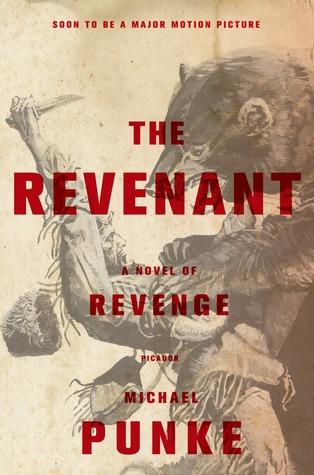
In 1823 Hugh Glass was brutally attacked by a bear, left for dead by his traveling companions, and lived to tell about it. I always planned to watch the movie that was based off of this book, starring Leonardo DiCaprio. After hearing podcasts discussing the incident, I learned that the movie strayed pretty far from the book and was not worth watching. I skipped the cinematic drama and went straight to the source, Michael Punke’s book.
This book hits on all the things boys fantasize about when they are young: Traveling across uncharted territories, hunting and trapping for food and furs, camping under the open sky, and encounters with incredible animals. However, this particular animal encounter turned Western real fast! Against all odds, Hugh Glass survives the brutal bear attack and manages to stay alive, fueled solely by rage and revenge.
Frankenstein- by Mary Shelley
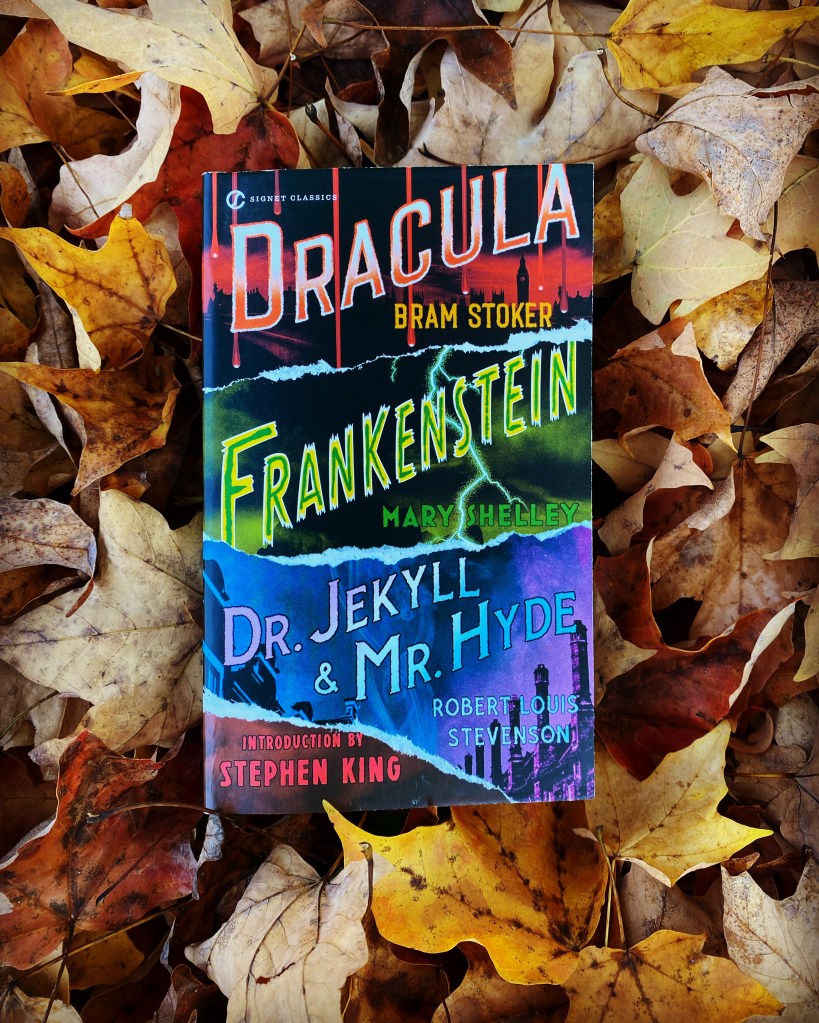
In October, I thought it would be fitting to read a scary story for spooky season. I don’t really have any experience in the horror genre, so I decided I would re-read a classic from my school days. I remember reading Frankenstein as required reading in my advanced English class in 9th grade. At the time, I wasn’t much interested in reading. Now that I am no longer being forced to read, I can’t get enough of books!
I remember as a freshman in high school being asked to examine the different themes in Frankenstein. One theme that I found relatable to the modern world was the controversial topic of abortion. I saw similarities between Dr. Victor Frankenstein’s regret for creating a hideous monster, and an expecting parent who regrets the creation growing inside of them. I couldn’t help but notice how Dr. Frankenstein abruptly regretted his work when he realized how this being he created could affect his own personal life and goals. My teacher, apparently, did not agree that the topic of abortion was in any way relevant, and relayed her feelings with a red “X” written on that portion of the assignment. I wanted to reread the book to see if I still had that opinion. You can read it for yourself and be the judge.
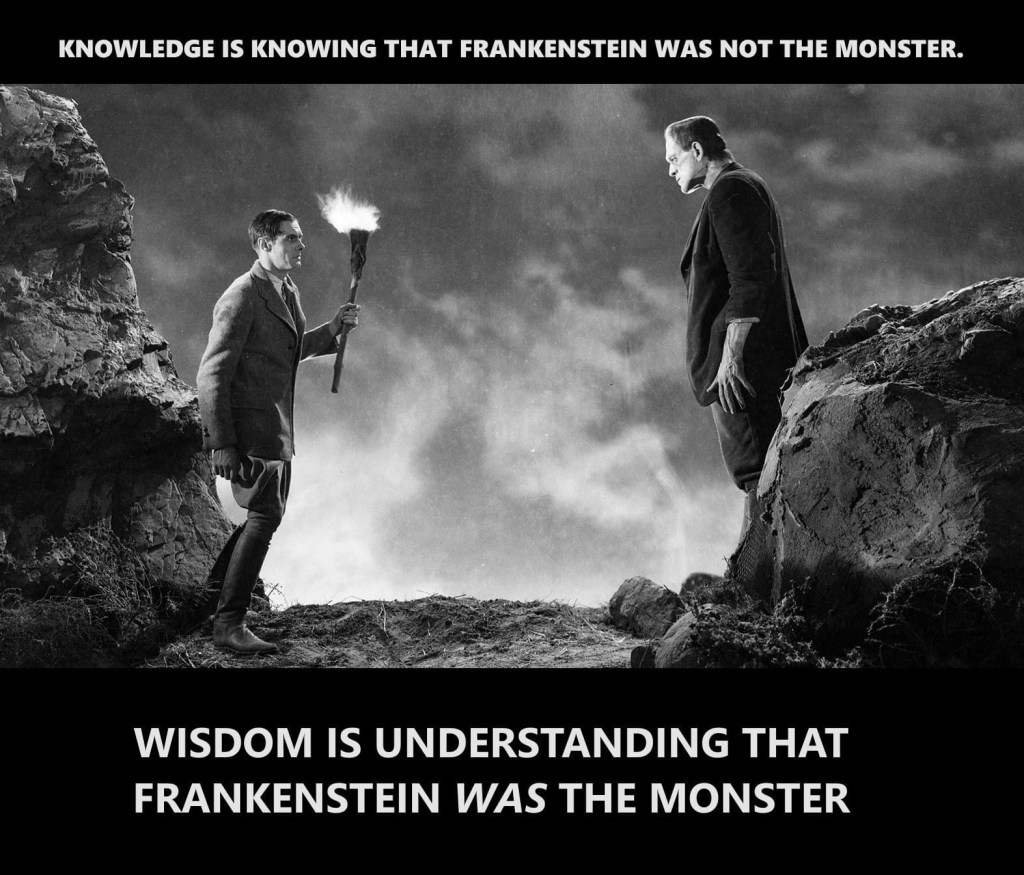
The story of Frankenstein’s monster taught me a lesson about how, just because you can do something, doesn’t mean that you should. Otherwise, you may be faced with regret and unimaginable grief, like the kind Dr. Frankenstein experienced.
Walden and Other Writings- by Henry David Thoreau
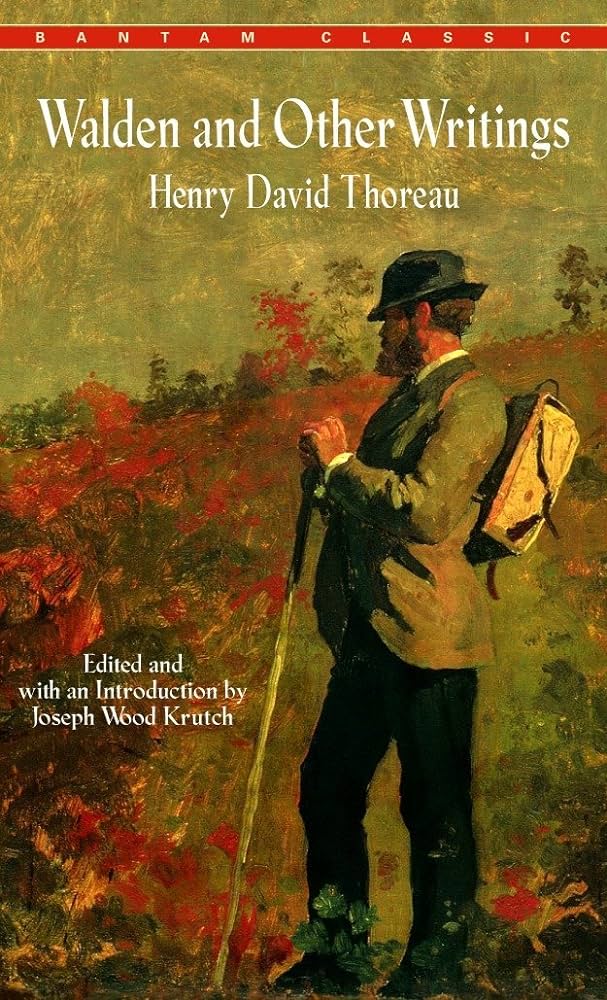
I first heard of the man who built his own cabin in the woods while listening to The Art of Manliness Podcast. Henry David Thoreau lived in this simple dwelling on Walden Pond for just over two years on the property of his friend, author Ralph Waldo Emerson. This story of a secluded life in the woods sounded intriguing to me. Come to find out, he was not as far from civilization as I had imagined, and usually walked into town every day. It was neat to learn about his cabin, and the area of Walden Pond in which it was constructed, but there was also a lot of non-essential information given that droned on at times. Many of his stories that I read seemed to have that theme: ramblings that did not seem to have a purpose or to land anywhere. The introduction to the book, written by Joseph Wood Krutch, even warned of this. In fact, I found the introduction to be very much enjoyable and informative about the life and beliefs of Thoreau. I probably could have stopped there and still felt well informed about the story of the cabin on Walden Pond.
Of the collection of stories I read of Thoreau’s, Civil Disobedience and Life Without Principles were the ones I liked best. I could really appreciate how Thoreau was noticing the injustices around him and the obvious government overreach that was going on. For example, he knew it was abhorrent to pay taxes to a government that thought it was okay to own another human as a slave. Even though his writings took place in the mid 1800s, his thoughts on politics and how to relate to his fellow man apply as well today as they did when he wrote them.
Called to Freedom- Edited by Elise Daniel

Called to Freedom is a collaboration of several different writers from the Libertarian Christian Institute (LCI). The book seeks to explain why a person can be both a libertarian and a Christian. I do find it a little strange that a book needed to be made to explain this, because I am not really sure why people think the two are at odds. I guess it is because most people do not have a clear understanding of what libertarian philosophy even is. If you are someone who thinks “libertarian” is some sort of dirty word, or is something that would be anti-Christian, this book provides a great explanation as to why a Christian can absolutely be a libertarian. By the time you get half way through this book, you may even come to the conclusion that a Christian should be a libertarian! Honestly, I think most Christians are more libertarian than they know, it’s just that they’ve been told their whole lives that Christians belong to a certain political party, and any other political philosophy therefore must be bad. This is utter nonsense. Called to Freedom explains why.
The Odyssey

War and violence, wealth and poverty, anger and revenge, Cyclops and Sirens: The Odyssey has all of this and more. First written in the 8th century BC, and considered by many to be the first great adventure story of the Western canon, The Odyssey has certainly stood the test of time.
Odysseus is a wealthy king that goes off to war and survives, only to become lost at sea, held captive by gods, creatures, and foes, and tempted by beautiful, yet deadly, singing Sirens. He endures almost every other circumstance you could image and is separated from his wife, Penelope, and his son, Telemachus, for two decades! Meanwhile, back in Ithaca, greedy suitors have taken over his home, are courting his reluctant wife, and are squandering his wealth with lavish banquets. Penelope remains faithful to her husband and grieves for him without rest. Her patience pays off when Odysseus returns to exact revenge on all those who have taken advantage of his absence.
I happened upon this book by random chance and decided to look it over to see if I remembered anything from when I originally skimmed through it nearly twenty years ago. As a teen, I just wanted to get through it as quickly as possible (with the help of Spark Notes) so I could get back to fishing. I was able to enjoy it more this time around.
The New Testament- New Living Translation

I have been reading through the Bible annually for several years now. This discipline has been immeasurably beneficial to my personal and spiritual life. Setting aside daily Bible reading time brings peace and balance to the day. I follow a reading plan that outlines exactly what to read each day in order to complete it in a calendar year.
This year I wanted to put a special focus on the New Testament. I wanted to take an opportunity to hone in on a smaller portion of the Bible as a way to be able to dig deeper into the content. I was able to use that time for further study on the day’s scripture and for journaling my thoughts about what I gained from the reading. I wanted to be careful not to get too caught up in the quantity I was reading, and focus more on how much I was able to get out of the passage.
Reading the entire Bible is absolutely something I recommend to everyone, especially confessing Christians! If that sounds too intimidating for you, start smaller. Find a reading plan that is more manageable. I have some recommendations in “Daily Pursuit” and “My Year in the Bible“. Believe it or not, it is not as hard or time-consuming as you think. In as little as twelve minutes of reading per day, you could read through the entire Bible in one year! This chart breaks it down:

Audio Books
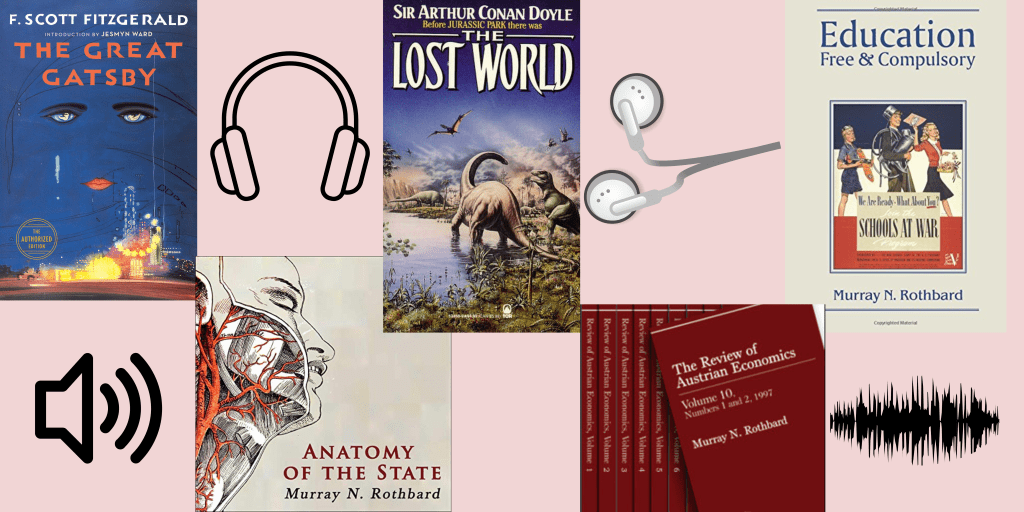
Do audio books count towards a reading goal? Maybe they don’t exactly count as reading, but they are books. I stumbled upon some free audio books from The Mises Institute as well as a good selection from Apple Audio Books. While I very much prefer a physical copy of a book, audio books are a good way to get in some “reading” time while on the go. I listened to these while I was driving, feeding my chickens, and exercising.
Listening to a book does come with some challenges. I found it hard to focus on the content, especially while doing something important, like driving. I wouldn’t recommend audio books for important content that you really need to study well and retain. I picked audio versions of books that I was interested in checking out, but that I didn’t really have time to sit and read at the moment. This way, I could revisit an old classic from my school days, like The Great Gatsby, or try out a story I have heard referenced in podcasts or articles, without interrupting the physical book I was already in the process of reading. I definitely plan to continue listening to books on audio as a way to get a glimpse into subjects that interest me.
In Conclusion
I was glad to have accomplished my reading goal of twenty-four books. Admittedly, I wouldn’t have accomplished it if I hadn’t included five audio books towards my total. I feel no shame. I also have a good line-up of a few books that I cannot wait to read next year! In the coming year, I plan to read a variety of different genres and categories of books. I like to do that to stay well rounded and to never stop learning.
I plan to read some old books, some newly published books, and some books that I think will challenge me. A few that I have in mind are City of God by St. Augustine, Until the Streetlights Come On by Ginny Yurich, The Stranger in the Woods by Michael Fink, and some stories by Ernest Hemingway.
I always plan ahead to have at least one book “on deck” for when I finish my current one. When I start to get halfway though my current book, I will go ahead and get my next one on order. I love the feeling of picking up a new book at my local bookstore!
If any of the titles I have listed above sparks your interest, I encourage you to drive to your local bookstore and pick up a copy. Make a personal reading goal for yourself this year! I have included some links to some of the books where you can view and purchase them online through an independently owned bookshop. Please #ShopSmall and support the local bookstores in your area. Trust me, they need our business right now. If you are like many people and do not have a bookstore in your town, I have provided a link in the “Additional Resources” at the end of this article that will allow you to shop online while still supporting a local bookstore!*
What About You?
What are you reading right now?
What new releases of 2023 did I miss? What are some free audio books that I should download next? I am always looking for new and exciting titles to add to my list!
Add your thoughts or recommendations in the comments below, contact me through this site by clicking CONTACT, or reach me by email at ruggedpursuitdevo@gmail.com.
Happy reading!
12.27.23
Additional Resources:
*Don’t have a local, independent bookstore in your area? You are not alone. Indie Bookstore Finder can help you find the closest independent bookstore to you based off your location. However, be aware that not all independent retailers are listed on their site.
*Is there absolutely no way you can visit an independent bookstore in-person? There is a way to shop online for the titles you want, and still buy from local bookstores closest to you. Check out Get it Local, Today! and Bookshop.org. This might be the next best alternative. Every purchase on their site supports independent bookstores.
*This website is provided free of charge by volunteers! If you feel led to support Rugged Pursuit and its mission to continue creating Christian devotional content, feel free to do so with the donation form below. Any and all support is much appreciated, but certainly not required.
Make a one-time donation
Make a monthly donation
Make a yearly donation
Choose an amount
Or enter a custom amount
Thank you so much for your one-time donation supporting the mission of Rugged Pursuit to spread the Gospel and encourage Christians through the content on this website. Thank you for partnering with us. Your contribution is appreciated!
Thank you so much for your monthly donation supporting the mission of Rugged Pursuit to spread the Gospel and encourage Christians through the content on this website. Thank you for partnering with us. Your contribution is appreciated!
Thank you so much for your yearly donation supporting the mission of Rugged Pursuit to spread the Gospel and encourage Christians through the content on this website. Thank you for partnering with us. Your contribution is appreciated!
DonateDonate monthlyDonate yearlyNew City, New Church

5 Things to Look for in a Church When You Move
Moving to a new city can bring about a lot of major changes in a person’s life: New jobs, new schools, new friends, and…new churches.
When asked about the biggest adjustments of moving to a new town, Christians often cite leaving their home church behind. Finding a church that you love, and are personally invested in, is a wonderful thing; one that can be hard to give up. The relationships you form at church tend to be deep and long-lasting because you have served alongside of these people and have connected on a spiritual level. That type of relationship with a person, or an organization, cannot be taken lightly.
However, Christians know that God calls His followers to things, sometimes unexpectedly. Sometimes that means being called to a new opportunity in a new city. Moving away comes with a lot of stress factors. First we have all the anxiety of finding a new place to live, navigating the housing market, and trying to choose a safe neighborhood. Not to mention all the physical burden of boxing up your belongings, loading them into a truck, and unloading them again in an unfamiliar place.
The hardest part, though, is usually the complete reset a move does to your life. You are suddenly thrust into a totally new and unexplored environment. Everything you do feels like starting over. You may have moved for a new job that requires training. At the same time, you are trying to make your new house feel more like a home. You may be registering your kids for a new school, finding sports leagues in the area, and trying to figure out which pizza places deliver to your new address.
All of these changes can be overwhelming. The biggest challenge, however, may be finding a new church. I am not sure what it is about visiting a new church that is so intimidating, but it tends to cause a lot of nervousness. It will likely take a lot of time to figure out if a church is right for you. Usually it would require several visits before you can start understanding what the church is like, what they believe, and how you can fit in. An additional level of difficulty is added when you do not know anyone who lives in that area that can help steer you in the right direction.
So, what is a person to do when going in blind to a church in a brand new city? Are there ways to hone in on which churches may be a good fit? Well, there are some things you can do to save yourself some time, as well as weed out places that may not be your style.
At the end of this article we will talk about how to “know before you go” by using some tools for researching the churches in the area before visiting in-person. But first, here are five basic things to look for in a church when you move to a new city.
1. Teaching and Doctrine
Look for a church that holds to sound biblical teaching and doctrine. The pastor should be preaching sermons that are clearly rooted in scripture from the Bible. The main focus should be on hearing from God, not on hearing a speech that is strictly motivational. The church’s beliefs should align with your understanding of the Bible and your faith tradition, or you may find yourself confused. This includes core theological beliefs such as the nature of God, salvation, and the role of scripture. You want to find out what the church, and church leadership, believes about foundational issues pertaining to Christianity and the Gospel message.
2. Worship Style
The music alone probably should not be as major of a thing to us as it is. Nevertheless, it is one of the main concerns people have when looking for a church. Consider the worship style that resonates with you. Different churches have varying approaches to worship, including traditional hymns, contemporary music, liturgical practices, or a blend of styles. I have visited churches that have more traditional hymns and acoustic music in their first service, and a contemporary, live band approach in the second service. This offers the church-goer options so they can choose which service to attend. Try to remember that the music is not the most important part of the worship experience. However, you will still likely want to choose a church where the worship style helps you connect with God and express your faith in the best way possible.
3. Denominational Affiliation
Depending on your background, you might prefer to attend a church affiliated with your particular denomination. Denominations can offer a sense of theological continuity and shared values. When visiting a church while I am out of town, I can typically find a church of a denomination I am familiar with and have a pretty good idea of what style of worship and preaching I am going to encounter. This can really narrow down your search by simply driving down the street and reading church signs.
This method becomes a little more tricky as churches drop the names of their denomination from their official church titles and instead call themselves things like “The Vine Community Church”, “Elm Grove Friends Church”, or “9th Street Congregation”. These general names are more inviting to a new generation of seekers, but can make them harder to distinguish from non-denominational and inter-denominational churches, so it is not a fool proof plan. If denominational affiliation is important to you, seek out churches that align with your denomination.
4. Community and Fellowship
A strong sense of community is often a hallmark of a healthy church. You want to find a place where you can really belong. The way to do that is to meet other members and build relationships with people inside of the church. Look for a church that emphasizes fellowship, small groups, and service opportunities for building relationships. Is the church having a potluck carry-in? Bring a casserole! Are they having a movie night? Pop some popcorn! Friday night bonfire? Pull up a chair! Getting involved is the only way to get to know the other people, so just show up! Connecting with fellow believers on a personal level can provide support, encouragement, and a sense of belonging.
Finding community and forming relationships is especially crucial when attending a larger church or gathering. The positive side of large churches is that they often have more resources to offer such as ministry opportunities, missions, and events. The downside is that it can be harder to form personal relationships in a large group setting. At a small country church, you get to know everyone’s name by default. It may be more difficult to find connections at large churches, but it is far from impossible. You may just need to be more intentional. Take a step out of your comfort zone and sign up for a small group Bible study. Participation in these groups is one way you can make big churches feel small. You will meet other members while taking steps closer to God. Go beyond Sunday morning worship and dig deeper into the scripture together!
5. Service and Outreach
Matthew 7:15-20 says “You will know them by their fruit”. So, consider the church’s commitment to serving both its congregation and the broader community. What classes or programs do they offer for their members to both be discipled and to learn to disciple others? In what ways are they providing aid to vulnerable people (James 1:27, Matthew 25:35-45)? What kind of service projects do they do in the community? In what ways are they actively pursuing the lost souls in their city?
“Thus, by their fruit you will recognize them.”
Matthew 7:20
Do you see any evidence of local mission projects that the church has done, or that they are currently involved in? Do people from their church go on mission trips? Who are their global mission partners? These are all questions to ask and things to investigate so you can learn how far the hands and feet of Christ are reaching outside of the building’s walls.
A church that engages in meaningful outreach projects and missions can be a sign of a congregation that lives out its faith in tangible ways. You should not have to dig too deep to find evidence that the church you are considering is actively involved in loving their members and loving the people around them.
“Everyone will know you are Jesus’ disciples if you love one another.”
John 13:35
Know Before You Go
Now, you might be thinking, “Okay this is all great information, but how can I know which churches have these qualities if I’ve never been there?” That is a valid question. The most thorough way to vet a congregation would be to visit that church multiple times so you can experience it firsthand. As I mentioned before, it could take awhile to really get a good read on a church if you are only experiencing it for an hour on Sunday morning. However, I know you may not want to invest that kind of time and likely want to narrow down your search to churches that you think have the highest potential for being a good fit.
So, let’s consider some ways that you can look into a church’s background, beliefs, and programs without actually attending in person.
Local Connections
If you have any friends or connections in the area in which you are moving, ask them if they have any churches they would suggest. At the very least, they may be able to help you determine what churches are closest to you and give you directions. Ask people at work where they attend and ask if you can tag along. It is always easier to go somewhere new if you do not have to go alone.
The World Wide Web
You can usually tell a lot about a church from their website, so find that right away. There will likely be a statement of faith explaining what they believe as a church/denomination. They may give some history about how or why their church was started. There may be a list of pastors and staff where you can view their credentials or get a feel for which leaders are affiliated with which programs. Hopefully, there will also be information about their Sunday School, small groups, life groups, Bible studies, ministries, and other programs they offer that will help you get plugged in and involved with other believers.
Social Media
Find their social media accounts and click around for awhile. There you will find pictures of their building, videos of their worship services, and maybe even some online sermons that you can preview. Look through their pictures from events they have held, community projects they have been involved in, and events that take place at the church. Scrolling through their social media feeds will help you to experience the church from a distance to quickly see if it is one you would feel comfortable in, or if it is a definite no-go.
*Bonus tip: as you scroll through their photos online, pay attention to how people are dressed at church. This will help you feel less stressed over what to wear, should you choose to visit in person.
Make the Leap
After you have done all of this pre-scouting, there is only one thing left to do: just walk through the door. Look, I know it is hard. I understand the anxiety of walking into an unfamiliar place for the first time, not knowing where to go, and wondering if you will be accepted. If there is anywhere we should be able to go without feeling out of place, it’s the Christian church! Easier said than done, I know, but you will not truly know if it is the church for you until you have been there and given it a chance.
However you choose to go about finding a new church, I just hope you succeed in doing so! Attending a local church that preaches the gospel and believes the Bible is crucial to your relationship with the Lord. The church is performing at its best when all the members are working together and moving in the same direction: towards Christ! You need the local church, and the local church needs you!
No church is perfect in all areas. They are all made up of imperfect people, like you and I. I am praying that the church you find will have a top notch welcome team that will greet you at the door and guide you in the right direction. I hope you will give it your best shot to give the church a chance, and that you will show grace in the areas where your preferences are not met. Find somewhere to be amongst fellow believers and get involved in what God is doing in your new city. You will not regret it.
11.30.23
Additional Resources
-There are websites that allow you type in a city and state to view a list of churches in that area. A couple sites that offer this service are Church Finder and The Gospel Coalition’s Church Directory.
*This website is provided free of charge by volunteers! If you feel led to support Rugged Pursuit and its mission to continue creating Christian devotional content, feel free to do so with the donation form below. Any and all support is much appreciated, but certainly not required.
Make a one-time donation
Make a monthly donation
Make a yearly donation
Choose an amount
Or enter a custom amount
Thank you so much for your one-time donation supporting the mission of Rugged Pursuit to spread the Gospel and encourage Christians through the content on this website. Thank you for partnering with us. Your contribution is appreciated!
Thank you so much for your monthly donation supporting the mission of Rugged Pursuit to spread the Gospel and encourage Christians through the content on this website. Thank you for partnering with us. Your contribution is appreciated!
Thank you so much for your yearly donation supporting the mission of Rugged Pursuit to spread the Gospel and encourage Christians through the content on this website. Thank you for partnering with us. Your contribution is appreciated!
DonateDonate monthlyDonate yearlyGet Your FAKs Straight
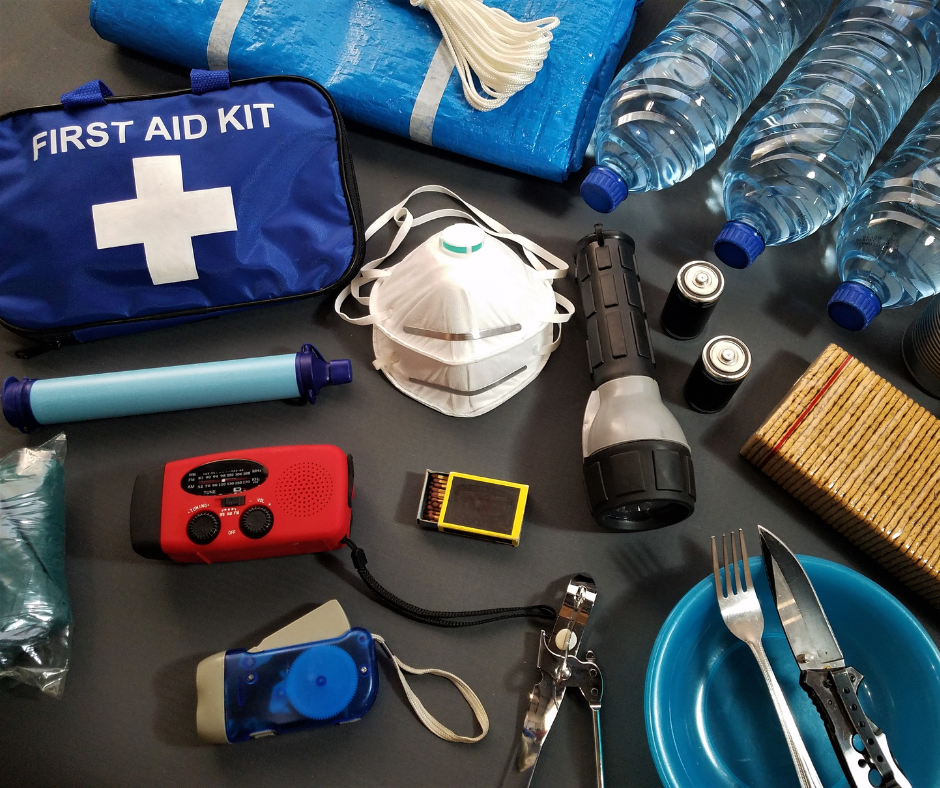
I love wild places! But the wilderness comes with inherent risks. For a worry-free excursion, prepare ahead of time for the scenarios you may encounter in the outdoors.
Preparedness is next to Godliness… okay maybe that is not how the saying goes. Regardless, it is important to be ready for anything when you go out to face the world.
At Rugged Pursuit, we love wild places. But wild places come with inherent risks. Those risks can add excitement to the adventure, but we need to be smart. Hiking, camping, hunting, and recreating in remote places means limited access to emergency services should you need assistance. Areas with good phone service in the back country are few and far between. Calling for help may not be an option. For a worry-free excursion, prepare ahead of time for the scenarios you may encounter, specific to your chosen activity.
Check the FAKs
Before you head out for any type of outdoor recreation, you need to make sure you have an accessible First Aid Kit (FAK) that it is complete and current. A first aid kit is a portable collection of medical supplies and essential tools designed to provide initial care and treatment for minor injuries and medical emergencies. FAKs are essential for quickly addressing injuries or medical issues in various settings, from home and workplace to outdoor adventures, and they play a crucial role in stabilizing and providing immediate assistance until professional medical help can be sought, if necessary.
Creating a basic first aid kit for outdoor activities like hiking and camping is crucial because you may encounter unique challenges and injuries in remote areas. For people who spend a lot of time pursuing outdoor activities, carrying a FAK in your vehicle at all times just makes sense. That way it is always accessible, even when you are on the go. Then, when you arrive at the location at which you plan to recreate, it will already be ready to grab when you leave the driver’s seat and enter the great outdoors!
Here is a list of items you should consider including in your car’s first aid kit for outdoor recreation:
General Supplies
- First Aid Manual: A wilderness-specific first aid manual or instruction booklet. This is not an adequate replacement for actual first aid training, but may be a helpful alternative. Should you find yourself in a bind with no access to internet search engines, this may be the difference between life and death, or at least prevent further complications. I attended a wilderness survival class and took notes using the “Notes” app on my phone. That way, I could reference them even when I did not have cell service.
- Adhesive Bandages: Various sizes and shapes to cover small cuts and blisters. With their small size and ease of use, Band-Aids are a no-brainer. At the very least, tuck a couple in your wallet before you go on a hike. Blisters on your heel can make the difference between a peaceful nature walk, and a terrible day.
- Sterile Gauze Pads and Rolls: For larger wounds and to control bleeding.
- Adhesive Tape: To secure dressings or splints. There are tons of uses for tape in the outdoors, so having a small roll handy is never a bad idea.
- Scissors or Pocket Knife: For cutting clothing, tape, or gauze. A man without a pocket knife is like a fish out of water. So, don’t leave home without one.
- Tweezers: To remove splinters, ticks, or other foreign objects from the skin, before they get the chance to cause longer-term damage.
- Cotton Balls and Swabs: For applying ointments and cleaning wounds.
- Disposable Gloves: To protect yourself and others during first aid.
- Antiseptic Wipes or Solution: To clean wounds and prevent infection.
A man without a pocket knife is like a fish out of water.
Tweet
Medications
- Pain Relievers: Over-the-counter pain relievers like ibuprofen or acetaminophen.
- Antihistamines: For allergic reactions or insect bites.
- Anti-diarrheal Medication: For gastrointestinal issues. And as a preventative, make sure you use a water purification method and carry a Lifestraw or Sawyer Water Filtration system any time you have to use a natural water source for drinking!
- Prescription Medications: Carry an extra dose than you think you may need, just in case you are out longer than intended.
Specialized Items
- Snake Bite Kit: If you are in an area with venomous snakes.
- Tourniquet: For severe bleeding control. Especially relevant for hunters. But use these with caution and knowledge, as they require special training to prevent further injury.
- Tarp/Emergency Space Blanket: To create a makeshift shelter during unexpected weather and to keep warm in case of exposure or shock.
- Whistle/Mirror: For signaling for help in emergencies.
- Navigation and Communication Tools: A map, compass, or GPS device, and a fully charged mobile phone with a power bank. I recommend that everyone have a GPS tracking app on their phone that they can use to record their route. This will help you retrace your steps should you get off trail. I always turn on the Tracker on my OnX app before I set off. This helps me to know where I am, even in unfamiliar territory. I also use OnX, or my phone’s built in GPS, to drop a pin where I parked my vehicle. Send this pin to your spouse, or a close friend, so they will know where to check if you do not return home when expected.
- Water Purification Tablets or Filter: In case you run out of clean water. (Remember how we talked about preventing diarrhea?)
- Multi-Tool or Swiss Army Knife: For various purposes, including cutting, opening containers, and repairing gear. A good multi-tool covers a multitude of sins!

A good multi-tool covers a multitude of sins!
Tweet
Always customize your first aid kit (FAK) based on your specific needs, the duration of your outdoor activity, and the environment you’ll be in. Regularly check and update the kit to ensure that items haven’t expired or deteriorated. Also, take the time to learn basic wilderness first aid techniques, and consider taking a wilderness first aid course if you engage in outdoor activities frequently.
Customize Your Kit
You may not be able to carry every single item on this list, depending on where you are going and what activity you are taking part in. If you are hiking, you could easily fit these items into a backpack. If your activity prevents you from carrying a large pack, perhaps you could tuck a few necessities into a fanny pack, or a pouch clipped to your belt. Neck pouches, worn as a necklace, can hold your phone, wallet, disinfecting wipes, and other small items that you want to keep close and secure. Toss a couple bandages in your wallet and a multi-function knife in your pocket.
I have a small, waterproof, plastic box that contains single-use first-aid items, a pocket knife, flashlight, fire-starter, and more. The whole container is smaller than my hand. This compact kit is great for keeping in the center console of my truck, and fits perfectly in the storage compartment of my kayak.
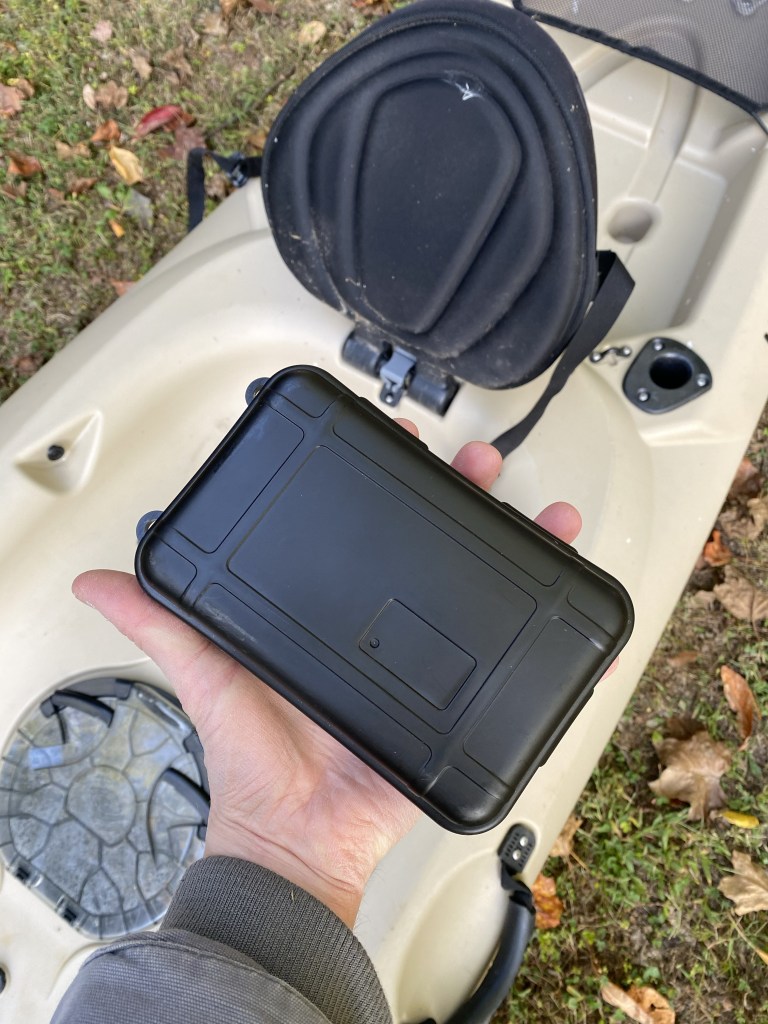

It is important to consider the specific activity you will be taking part in, and what risks it could bring, then modify your kit accordingly. Put some thought into what adjustments you could make to trim down what you carry, without putting your safety at risk.
Hiking? Take small bandages for blisters. Hunting? Get trained to use a tourniquet correctly. Camping? Better pack some tweezers and a specialized tick-removal tool.
Having the right tools can save, not only your own life, but the lives of others. The wilderness survival skills and first aid knowledge you acquire could greatly benefit the companions recreating with you. Not to mention the people you may encounter in the woods who have been injured, stranded, or did not prepare for the scenario they got themselves into.
So, before you head out this weekend, get your FAKs straight! Someone’s life could depend on it.
What’s in Your FAK?
Is there anything I missed?
What is something you never leave the house without?
Have you ever found yourself lacking the necessary tools in a sticky situation?
Share your story in the comments!
10.12.23
Lighthouses & Bomb Shelters

“Christians are to be a beacon of hope, not a bunker of doom. Don’t hunker down and hold tight. Instead, shine bright and reach out.”
“You are the light of the world. A town built on a hill cannot be hidden. Neither do people light a lamp and put it under a bowl. Instead they put it on its stand, and it gives light to everyone in the house. In the same way, let your light shine before others, that they may see your good deeds and glorify your Father in heaven.”
Matthew 5:14-16
What type of Christian do you want to be? There are two approaches, in particular, that I want you to consider. One path will open up the door for you to influence others, but brings with it a certain amount of risk to yourself. The other will keep outside influences at bay, but keeps you relatively safe from infection.
There is an attitude I have noticed in Christian circles and among churches. I will not call it a trend because trends are usually temporary. This point of view is something that has been around a long time. I remember this philosophy from as early as childhood. It does not permeate all churches or believers, but it is still prevalent amongst our Christian culture. I will call it “Bomb Shelter Theology”.
Bomb Shelter Theology
Bomb Shelter Theology is the mindset that, as Christians in a sinful world, we must separate ourselves from outside influences. It teaches us to believe we must burrow under ground to escape from anything that does not have a Christian brand on it. Anything that is not specifically labeled “Christian” is “secular” and therefore viewed as poisonous and repulsive. Secular music, movies, and people are to be avoided at all costs, lest you become contaminated by them.

Bomb Shelter Theologians can even treat other professing Christians as tainted for not prescribing to their particular denomination, views, or styles. People with differing opinions on what is acceptable for Christians to do and believe are viewed with skepticism and suspicion as to whether or not this person truly is a Christian, or just a wolf in sheep’s clothing. Instead of seeking to understand their fellow Christian’s point of view and, in turn, opening up the possibility for positive change, Bomb Shelter Theologians militantly repel the person to avoid their “dangerous” viewpoints. Like a real bomb shelter, this mindset tells us to keep far away from the perceived danger in order to wait things out and survive.
Set Apart
Now, before we go further, we should first point out the positive aspects of this approach, because I think it most often comes from good intentions. As Christians, we do want to keep our lives pure and avoid sin so that we may show ourselves worthy before a Holy God. This is an honorable pursuit.
“Be diligent to present yourself approved to God, a worker who does not need to be ashamed, rightly dividing the word of truth.”
2 Timothy 2:15
The Bible contains several verses that discuss the concept of being set apart, or separating oneself for a specific purpose, or from worldly influences. Here are a few verses that touch on this theme, shown here in the New International Version (NIV) of the Bible:
- 2 Corinthians 6:17: “Therefore, ‘Come out from them and be separate, says the Lord. Touch no unclean thing, and I will receive you.'”
- Romans 12:2: “Do not conform to the pattern of this world, but be transformed by the renewing of your mind. Then you will be able to test and approve what God’s will is—his good, pleasing and perfect will.”
- James 4:4: “You adulterous people, don’t you know that friendship with the world means enmity against God? Therefore, anyone who chooses to be a friend of the world becomes an enemy of God.”
- 1 Peter 2:9: “But you are a chosen people, a royal priesthood, a holy nation, God’s special possession, that you may declare the praises of him who called you out of darkness into his wonderful light.”
- Colossians 3:2: “Set your minds on things above, not on earthly things.”
- Leviticus 20:26: “You are to be holy to me because I, the LORD, am holy, and I have set you apart from the nations to be my own.”
- Psalm 4:3: “Know that the LORD has set apart his faithful servant for himself; the LORD hears when I call to him.”
These verses emphasize the idea of believers being set apart for God’s purposes, striving to live in accordance with His will, and avoiding conformity to the ways of the world. They encourage a separation from sinful or worldly influences while pursuing holiness and obedience to God.
One thing we need to remember, however, is that we need to consider God’s overall plan, and the message of the Bible in its entirety, in order to apply the scriptures to our lives. We are all susceptible to unintentionally taking verses out of context. Sometimes they are purposely, or negligently, used out of context as a way to weaponize them against our “enemies“, or to win an argument with someone that has opposing views. With that in mind, there are plenty of other passages in the Bible promoting the idea of reaching the lost, helping people in need, and befriending sinners, so these verses about being “set apart” are not the end of the story, but rather one part of God’s much bigger picture.
When our focus remains solely on the idea of being set apart, we tend to mistakenly believe we need to stay away. Sure, we want to refrain from sin, but what else might we be avoiding? Are we ignoring people who could benefit greatly from hearing about the love of Jesus? Are we prematurely writing people off based on their past habits, or even their current struggles? If their lifestyle is different from yours, do you see that as an impossible barrier or a possible opportunity? I am wondering how we will reach the world for Christ if we are completely and totally separated from it. Is there another approach that allows us to impact others, without losing our values?
Lighthouses
A lighthouse is a tall, tower-like structure situated along coastlines, cliffs, or other hazardous nautical areas, designed to emit a powerful, visible light signal. Lighthouses serve as crucial navigational aids for ships, helping them safely traverse treacherous waters and avoid dangerous obstacles like rocks and reefs, particularly during inclement weather or low visibility conditions. Lighthouses typically house powerful light sources, making it visible from great distances. Some lighthouses also may emit distinctive patterns of light or sounds, known as light characteristics or fog signals, which further assist sailors in identifying their location.
There are some really important takeaways to glean from the lighthouse’s job description. Notice how the lighthouse is strategically placed in hazardous areas. It was constructed there on purpose because assistance was so obviously needed in that area. If there were no dangers in the area, there would be no need for a lighthouse. Lighthouses become especially needed during storms and under undesirable conditions.
If a lighthouse did not emit lights and sounds in order to communicate with imperiled travelers, how would it fulfill its purpose? Do we not fall short of our own calling when we fail to communicate the Word of God to those who are unaware, at the times when they need it most?
Lighthouses light up the sea, Jesus is the light of the world (John 8:12). He came to this world to save it, not condemn it (John 3:17). He is shining a light and showing us the way. In the middle of our struggles, He joins us and guides us through to safety (Romans 5:8). We can follow His example and do the same.
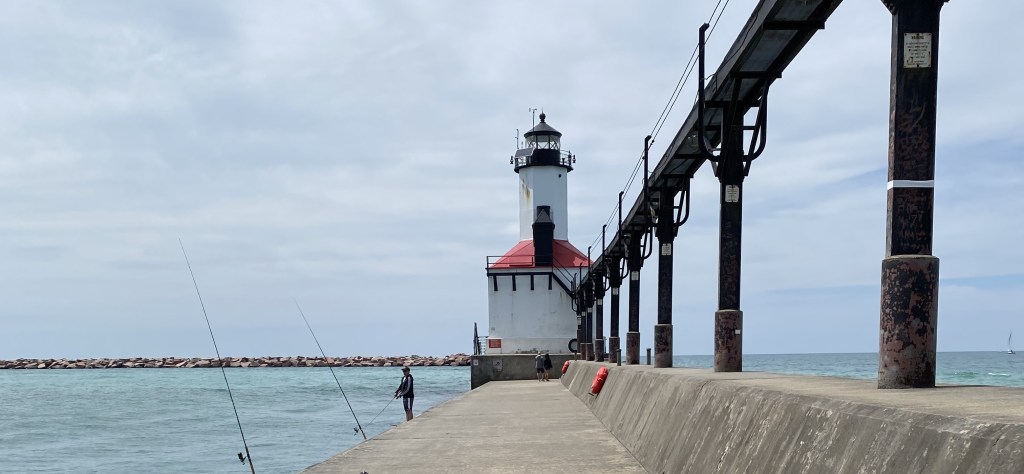
Shine a Light
In a world full of darkness, do not bury your head in the sand. Instead, be a lighthouse. Stand tall and shine bright so others can see. Be a beacon of light and hope for lost and weary travelers. Rather than avoiding danger, put on the full Armor of God, stand firm and confront it, thwarting its evil plans in the process.
To avoid negative influences of the world, so as to not be corrupted, make sure you have constructed a firm foundation (Matthew 7:24-27). Have a plan for delivering clear and gentle communication to those needing direction (1 Peter 3:15-16). Waves breaking against the shore do not shake the lighthouse. It was made for just this purpose. Who knows if perhaps you were made for such a purpose as this as well (Esther 4:14)?
Could you become a Lighthouse Christian to the people in your life?
“In the same way, let your light shine before others, that they may see your good deeds and glorify your Father in heaven.”
Matthew 5:16
“The Great Commission” is a command to go and make disciples of all people. In Matthew 28:16-20, Jesus has resurrected from the dead, appeared to the remaining eleven disciples, and is instructing them on their next steps, now that He will no longer be with them physically.
If Jesus was concerned solely with their safety and preservation, He could have told them to run and hide in the mountains. He could have warned them to keep quiet about what they had seen and experienced in order to avoid trouble with the religious elites. Better yet, He could have just taken them up to Heaven with Him in a chariot of fire, removing them from this sinful, fallen world. However, He did not do any of those things. Instead, Jesus tells them to go out and tell everyone the news, make disciples, baptize them, and teach them to obey all of His instructions. This strategy proved to be immeasurably effective as these eleven people started the spread of the teachings of Jesus all across the nations to the entire world.
“I will remain in the world no longer, but they are still in the world, and I am coming to you. Holy Father, protect them by the power of your name…”
John 17:11
Once you have the knowledge of Jesus’ great love for you, and understand the sacrifice that He made in order to have a relationship with you, a natural next step is to tell someone the good news. Information this impactful cannot be kept to yourself! A light that bright is hard to miss, even in a place so dark. Hide it under a bushel? No! The message of Christ is to be relayed to everyone, regardless of social status, background, or nationality. Christianity is not a country club or a secret society. Jesus is for everyone.
Reaching Out
If Jesus instructed His disciples to go and make more disciples, I am positive He expects us to do the same. Just like He did not remove the disciples from this world when He went to the cross, He doesn’t take us to Heaven as soon as we become believers either. The Bible tells us that, though Christians continue to live in the world, they are not of the world. Eternity is promised to us as believers in Christ, but we still have work to do here on Earth.
“I have given them your word and the world has hated them, for they are not of the world any more than I am of the world. My prayer is not that you take them out of the world but that you protect them from the evil one. They are not of the world, even as I am not of it. Sanctify them by the truth; your word is truth. As you sent me into the world, I have sent them into the world. For them I sanctify myself, that they too may be truly sanctified.”
John 17:14-19
Here are a few verses from the Bible that talk about the importance of reaching out to others.
- James 1:27 says “Religion that God our Father accepts as pure and faultless is this: to look after orphans and widows in their distress and to keep oneself from being polluted by the world.” -It is not an either/or scenario. We are to both reach out and protect ourselves from sin. These things can, and should, happen simultaneously.
- 1 Corinthians 9:22 encourages us to meet people where they are in order to save them.
- Luke 10:25-37 tells the “Parable of the Good Samaritan”, one of Jesus’ most famous teachings. This parable emphasizes the importance of helping and showing kindness to those in need, regardless of their background or circumstances. It teaches us that our “neighbor” is anyone that is in front of us that needs help.
- Proverbs 3:27-28 says “Do not withhold good from those to whom it is due, when it is in your power to act. Do not say to your neighbor, ‘Come back tomorrow and I’ll give it to you’— when you already have it with you.” -In other words, if you can help, then you should help. If you have life-saving knowledge, like the Gospel of Jesus Christ, and you withhold it, how can this be honoring to God?
- Galatians 6:2 tells us to “Carry each other’s burdens, and in this way, you will fulfill the law of Christ.” -When we are in relationships with people, we start to connect with them on a deeper level. We become emotionally invested in the their lives because we are living in community with them. We get to know their hurts and hangups, setting us up to be able to come alongside them in their struggles.
I encourage you to look up these verses in your Bible, or click the links to view them online, so you can read them in their entirety and in context of the whole passage.
Follow Me, As I Follow Christ
“Follow my example, as I follow the example of Christ.”
1 Corinthians 11:1
We are supposed to be leading by example when it comes to showing others how to live like Jesus. We cannot show Jesus to people if we are steering clear of them. As Christians, we are meant to be lighthouses; guiding others through trouble, and offering an extended hand to pull them into the lifeboat.

Sometimes we end up being bomb shelters instead, hiding from trouble and the outside world. When you hunker down, you keep everything to yourself. You can’t save others. It’s a selfish way to live. It’s survivalism rather than evangelism. It’s holding tight instead of reaching out. Christians are to be a beacon of hope, not a bunker of doom.
9.21.23

*This website is provided free of charge by volunteers! If you feel led to support Rugged Pursuit and its mission to continue creating Christian devotional content, feel free to do so with the donation form below. Any and all support is much appreciated, but certainly not required.
Make a one-time donation
Make a monthly donation
Make a yearly donation
Choose an amount
Or enter a custom amount
Thank you so much for your one-time donation supporting the mission of Rugged Pursuit to spread the Gospel and encourage Christians through the content on this website. Thank you for partnering with us. Your contribution is appreciated!
Thank you so much for your monthly donation supporting the mission of Rugged Pursuit to spread the Gospel and encourage Christians through the content on this website. Thank you for partnering with us. Your contribution is appreciated!
Thank you so much for your yearly donation supporting the mission of Rugged Pursuit to spread the Gospel and encourage Christians through the content on this website. Thank you for partnering with us. Your contribution is appreciated!
DonateDonate monthlyDonate yearly4 Benefits of Local Bookstores

Recently, another locally owned bookshop closed down in my city. While that is sad news, for many reading this, it probably is not shocking news. This has been a trend for years. With the ease and affordability of online shopping, it is becoming increasingly difficult for independently owned stores to compete.
There are a few reasons that consumers have shifted their shopping habits towards an almost exclusively online experience. First, rather than driving in their car across town and walking the aisles, they can browse thousands of titles at a time on their smartphone from the comfort of their home, and never leave the couch. Also, there is the advantage of potential money savings. In some cases, online retailers can offer cheaper products by buying their books in bulk from publishers and distributors, thus making the price for the online shopper lower. Online retailers also boast of faster delivery, given that they have the ability to ship from several different warehouses in multiple states.
So, there are some things to gain by shopping online. But let us also consider what we are losing when we don’t shop at brick-and-mortar bookshops. We should now consider the many reasons why shopping in-store can be incredibly beneficial to you, your local community, and the world!

Here are just four of the many reasons shopping at locally owned bookstores is important and beneficial:
1. Support for the Local Economy
When you shop at a locally owned bookstore, your money stays within the community. These businesses are often smaller and independently operated, which means the revenue generated from your purchase directly supports the local economy. This, in turn, helps create jobs, sustain local businesses, and fosters economic growth in the area.
According to the American Independent Business Alliance, on average, 48% of each purchase at local independent businesses was recirculated locally, compared to less than 14% of purchases at chain stores. The Institute for Local Self-Reliance conducted a test in several small communities. Their study found that $100 spent at local independents generated $45 of local spending, compared to just $14 for a big-box chain.

When you shop at local, independently owned small businesses, your money isn’t going towards buying a wealthy corporate CEO another house boat to sail to their private island paradise. Instead, your money sponsors tee-ball teams in your neighborhood, Girl Scout troops in your city, and 4-H county fair clubs. It buys new glasses for a store clerk’s son and braces for their daughter. Your dollar gets passed along to homeless shelters and at-risk-families in your town. Your hard earned money makes a huge impact on your local community when it stays in your local community.
“Your hard earned money makes a huge impact ON your local community when it stays IN your local community.”
Tweet
2. Unique and Diverse Selection
Local bookstores tend to curate their selections based on the interests and preferences of their community and their shoppers. As a result, they often offer a more diverse and unique range of books compared to larger chain stores. You can find books by local authors, niche genres, and titles that may not be as readily available in bigger commercial stores, who tend to focus mainly on the newest releases or top-sellers.
3. Personalized Recommendations
Local bookstore owners and staff are passionate about books and have an in-depth knowledge of their store’s inventory. They are often avid readers, therefore can offer personalized recommendations based on your interests and reading preferences, leading to more enjoyable and meaningful book discoveries. You can tell a store clerk what books you have read lately and they can tell you which title comes next in the series, or recommend another author they think would spark your interest.
Bookstore owners and workers are truly experts that know their products inside and out. They can explain the difference between imitation leather, bonded leather, and genuine leather. They can give you special insider insight about products because they have used them themselves. They not only will help you pick out the perfect journal, but they will also show you exactly which pen writes best, has waterproof ink, and won’t bleed through your pages. A bookstore clerk can turn your mundane shopping errand into a positive and informative experience.
“A bookstore clerk can turn your mundane shopping errand into a positive and informative experience.”
Tweet
4. Community Gathering Spaces
Local Bookstores are a “Third Place“. What is that, you ask? Well, let me explain: Your first place is where you live. Your second place is where you work. Third places are anywhere you go frequently, that are not the first two. This could be places like churches, coffee shops, fitness centers, and especially, bookstores! Your third place should be somewhere social and relaxing. It is a place where you can be around other people who share a common interest. It may be a place where you catch up with old friends, meet new ones, or can feel free to just be present without the obligation to be productive. The idea of a third place comes from the book “The Great Good Place” by sociologist Ray Oldenburg. You can purchase his book online at a deep discount by clicking HERE… Just kidding. There is no link. Go ask for a copy at your local bookstore!
Independent bookstores often serve as community hubs as well. Since many bookstores have coffee shops and cafes located inside, this gives them the extra space to open up their store for group events and gatherings. My local bookstore has kids events throughout the year that allow children and their families to come make a craft, eat baked goods, listen to a story, play games, and other fun activities. Bookstores host book clubs, author readings and signings, informative classes, and other local events. These gatherings provide opportunities for like-minded individuals to connect and unwind, fostering a sense of community and intellectual exchange.

In summary, shopping at small, locally owned bookstores is not just about buying books; it’s about investing in the well-being of your community, fostering a vibrant literary culture, and supporting independent businesses with unique offerings and personalized services.
The next time you find yourself in need of a text book for school, a relaxing summer read for your upcoming vacation, or a warm love story for the long, cold winter months, take a stroll to your local corner bookshop. They will know just the thing!
9.1.23
Additional Resources:
*Don’t have a local, independent bookstore in your area? You are not alone. Indie Bookstore Finder can help you find the closest independent bookstore to you based off your location. However, be aware that not all independent retailers are listed on their site.
*Is there absolutely no way you can visit an independent bookstore in-person? There is a way to shop online for the titles you want, and still buy from local bookstores closest to you. Check out Get it Local, Today! and Bookshop.org. This might be the next best alternative. Every purchase on their site supports independent bookstores.
*The Local Multiplier Effect, by the AMIBA. Read the full PDF report here.
*Cover image features Fallen Leaf Books, Nashville, Indiana
Make a one-time donation
Make a monthly donation
Make a yearly donation
Choose an amount
Or enter a custom amount
Thank you so much for your one-time donation supporting the mission of Rugged Pursuit to spread the Gospel and encourage Christians through the content on this website. Thank you for partnering with us. Your contribution is appreciated!
Thank you so much for your monthly donation supporting the mission of Rugged Pursuit to spread the Gospel and encourage Christians through the content on this website. Thank you for partnering with us. Your contribution is appreciated!
Thank you so much for your yearly donation supporting the mission of Rugged Pursuit to spread the Gospel and encourage Christians through the content on this website. Thank you for partnering with us. Your contribution is appreciated!
DonateDonate monthlyDonate yearlyGet Some Rest
“In our busy culture, we tend to wear ourselves out. We are seeking success and contentment, but what we get is exhaustion. When life gets too busy, follow the example of Jesus and His disciples: withdraw, go to a quiet place, and get some rest!”
“Then, because so many people were coming and going that they did not even have a chance to eat, he said to them, ‘Come with me by yourselves to a quiet place and get some rest.’ “
Mark 6:31
Do you ever feel like you are constantly running around, playing catch up, tackling errands, scheduling meetings, fulfilling obligations? Are you having a hard time finding a moment to yourself to just recharge? In our production-over-everything culture, we tend to wear ourselves out trying to do everything and be everywhere. We are seeking success and contentment, but what we get is exhaustion.
Being a driven and motivated person is not necessarily a negative thing. The world has benefited greatly from people with these traits, and we very much need them! However, all of this pressure to reach goals, obtain riches, or accomplish tasks can start to weigh on a person. Stress and lack of sleep can really take a toll on a person’s body and mind.
“In vain you rise early and stay up late, toiling for food to eat—for he grants sleep to those he loves.”
Psalm 127:2
Is there a way to reach some sort of balance? What if there is a way to be successful in your career and home life, while still setting aside crucial time for rest, relaxation, and recreation? The key to balancing these things is setting boundaries and priorities.
The Bible provides several scriptures that emphasize the importance of rest and the value of taking time to rejuvenate. Let’s look at a few and see how we can learn from them and apply them in our lives.

In the Beginning
We do not get very far into the Bible before we learn the importance of rest: just two chapters in, to be exact. In the beginning of Genesis, God has created everything in the entire world in just six days. And you thought your work deadlines were brutal! Then, we read this passage:
“By the seventh day God had finished the work he had been doing; so on the seventh day he rested from all his work. Then God blessed the seventh day and made it holy, because on it he rested from all the work of creating that he had done.”
Genesis 2:2-3
So, even God, who is all powerful, saw the value in resting after the completion of a big task. If it is important to God to get some rest, something tells me that it should be important to us too. I think He was setting an example for us. God made the seventh day holy, and this brings up the topic of “the Sabbath”. We read about the Sabbath in the Bible but it causes a little bit of confusion in our modern society. The thought of taking a full day off from doing any work at all sounds so foreign to us. Yet, the Jewish leaders had some very strict rules about observing the Sabbath (Exodus 20:8-11).
There is a lot of debate about what exact day the Sabbath is, whether it be Saturday or Sunday, but that is not really the thing I want to focus on. The main point I want to make here is that the Sabbath is set aside as a time to honor God and recharge.
Get On Board
Have you ever been so busy at work that you skipped your lunch break? In Mark 6:30-32, Jesus encourages His disciples to get away with Him and get some rest. The disciples had been so busy teaching that they did not even have time to eat! Jesus knew the disciples were doing important work. He could have said to them “Keep it up! Keep engaging the crowd! Work harder! Teach longer!” But He didn’t. He said “…get some rest.”
“The apostles gathered around Jesus and reported to him all they had done and taught. Then, because so many people were coming and going that they did not even have a chance to eat, he said to them, ‘Come with me by yourselves to a quiet place and get some rest.’ So they went away by themselves in a boat to a solitary place.”
Mark 6:30-32
I find the solution that Jesus suggests to be so refreshing! They have been busy, they are hungry, they are likely exhausted… and Jesus just says “Come with me…” I think He might be saying the same thing to us at times. We tend to run so hard that we lose sight of Jesus’ directions. If we take a breath and report to Jesus all we have been doing, I wonder if He might meet with us, by ourselves, in a quiet place, just like He did with the disciples.
I love that they went away, just them and Jesus, to a solitary place. My favorite part is that they went in a boat. There is a place I am reminded of when I read this passage. When kayaking and fishing on a local lake, I discovered a small, somewhat hidden cove. I paddled down the narrow opening off the larger lake, curious to see where it led. At the end of the long, narrow stretch, it opened up into a round, cozy section of water surrounded by forest on all three sides. The water was a really unique greenish color and appeared as smooth and still as a sheet of ice. It was so quiet and peaceful back there away from other boaters and visitors. It was like I had escaped to another setting altogether.
I wasn’t the only one who knew about this secret spot, however. One day I paddled all the way across the lake and down the narrow strip back to the cove. Someone had beaten me there. It was a whitetail deer standing on the edge of the bank, drinking from the cool, green water. She had also found this spot to be a place of refreshment, solitude, and peace.


I know from other parts of scripture that the disciples, and Jesus, were involved in a fair amount of fishing. I find it so relatable that Jesus’ solution to burn out was a trip in the boat to get some solitude. Now, I don’t know if they happened to cast a line on this mini-excursion, (or more likely a net, in their case) but I know exactly how they felt pushing off the bank and drifting out onto the water where it was quiet and peaceful.
Your Soul Needs Rest
We all get to points in our lives where we just need rest. Often it is physical. Our bodies are tired from running around. We try to push through, to keep going, to ignore the signals our aching bodies are sending to our brain, but we cannot keep this up forever. Eventually our bodies will get the physical rest they need. We can either do it voluntarily, or it may come to us against our will in the form of illness or injury. One way or another, though, we will have to take a break.
However, it can run deeper than physical tiredness. Another way we need rest is emotionally. It can be hard to admit when we are overwhelmed. We trick ourselves into thinking that everyone else has it all together and we do not want to appear weak. The reality is, we are all susceptible to burn out and inner turmoil. The everyday stresses of life, the constant pressure to be better than someone else, and the hurts and hang-ups of our past can pull us into a pit of despair. Grief overtakes us and does not want to let go. Mishaps seem to find us wherever we go. We can start to feel like we are dealing with so much that we cannot possibly keep up with our own thoughts. That is when it is time to invest in your spiritual life by getting some rest for your soul.
“Come to me, all you who are weary and burdened, and I will give you rest. Take my yoke upon you and learn from me, for I am gentle and humble in heart, and you will find rest for your souls. For my yoke is easy and my burden is light.”
Matthew 11:28-30
In Matthew 11:28-30, Jesus invites all who are tired and burdened to find rest in Him. He says come to me and I will give you rest for your soul! Does that not sound rejuvenating? Jesus offers to take our heavy burdens away. There is no weight so heavy that He cannot carry it. He lifts the yoke off of our shoulders and buries it at the foot of the cross. We can shake off the guilt we are carrying and find rest in our Savior who has already paid the price of our shortcomings. We can live free knowing that He has already won every battle that we are fighting (John 16:33).

These passages from scripture emphasize the value of rest, both in terms of physical rest and spiritual rejuvenation. They encourage the idea that rest is not only a necessary aspect of life but also a spiritual principle that reflects a trust in God’s provision and care.
What About You?
-What are you needing rest from?
-Do you have a Sabbath?
-What needs to change in your schedule so that you can dedicate time to God?
-What is weighing on you that you would like Jesus to lift off your shoulders?
Let us know in the comments below.
“But Jesus often withdrew to the wilderness for prayer.”
Luke 5:16 (NLT)
When life gets too busy, follow the example of Jesus and His disciples: withdraw, go to a quiet place, and get some rest!
8.19.23
*This website is provided free of charge by volunteers! If you feel led to support Rugged Pursuit and its mission to continue creating Christian devotional content, feel free to do so with the donation form below. Any and all support is much appreciated, but certainly not required.
Make a one-time donation
Make a monthly donation
Make a yearly donation
Choose an amount
Or enter a custom amount
Thank you so much for your one-time donation supporting the mission of Rugged Pursuit to spread the Gospel and encourage Christians through the content on this website. Thank you for partnering with us. Your contribution is appreciated!
Thank you so much for your monthly donation supporting the mission of Rugged Pursuit to spread the Gospel and encourage Christians through the content on this website. Thank you for partnering with us. Your contribution is appreciated!
Thank you so much for your yearly donation supporting the mission of Rugged Pursuit to spread the Gospel and encourage Christians through the content on this website. Thank you for partnering with us. Your contribution is appreciated!
DonateDonate monthlyDonate yearly Rugged Pursuit